
The Life and Death of the Arab-Jew: Eretz Israel-Palestine and Beyond
Keywords:
Arab-Jewish identity, Arab Jews, Tanzimat, Inter-religious equality, Arab nationalism, Zionism, Separation of religion and state, Jews of Arab countriesAbstract
The Arab-Jewish identity as a political (rather than linguistic or cultural) identity was a product of the modern era. It emerged in tandem with the first, vague ideas of inter-religious equality, which were introduced during the Ottoman reforms (Tanzimat) of the mid-nineteenth century. The inclination of the early Arab national movement towards separation of religion and state, strengthened processes of Jewish integration in the political and cultural lives of their environments, hence creating the ‘Arab Jew’ as an integral part of the general society.
However, this identity, being dependent on the acceptance of the idea of equality, proved to be short-lived. In Palestine, the egalitarian idea was replaced by the idea of a Jewish nation state, promoted by the Zionist movement, and supported (not necessarily actively) by the ‘Arab Jews’, thus bringing about the demise of this identity during the 1920s. In the neighboring countries, it was the combination of rejection of the principle of equality by nationalistic and Islamic circles, and the increasing notion – advocated by both Zionist and Arab national circles – that Jews are by definition Zionists. Under these circumstances, towards 1948 the identity ‘Arab-Jew’ became politically irrelevant elsewhere.
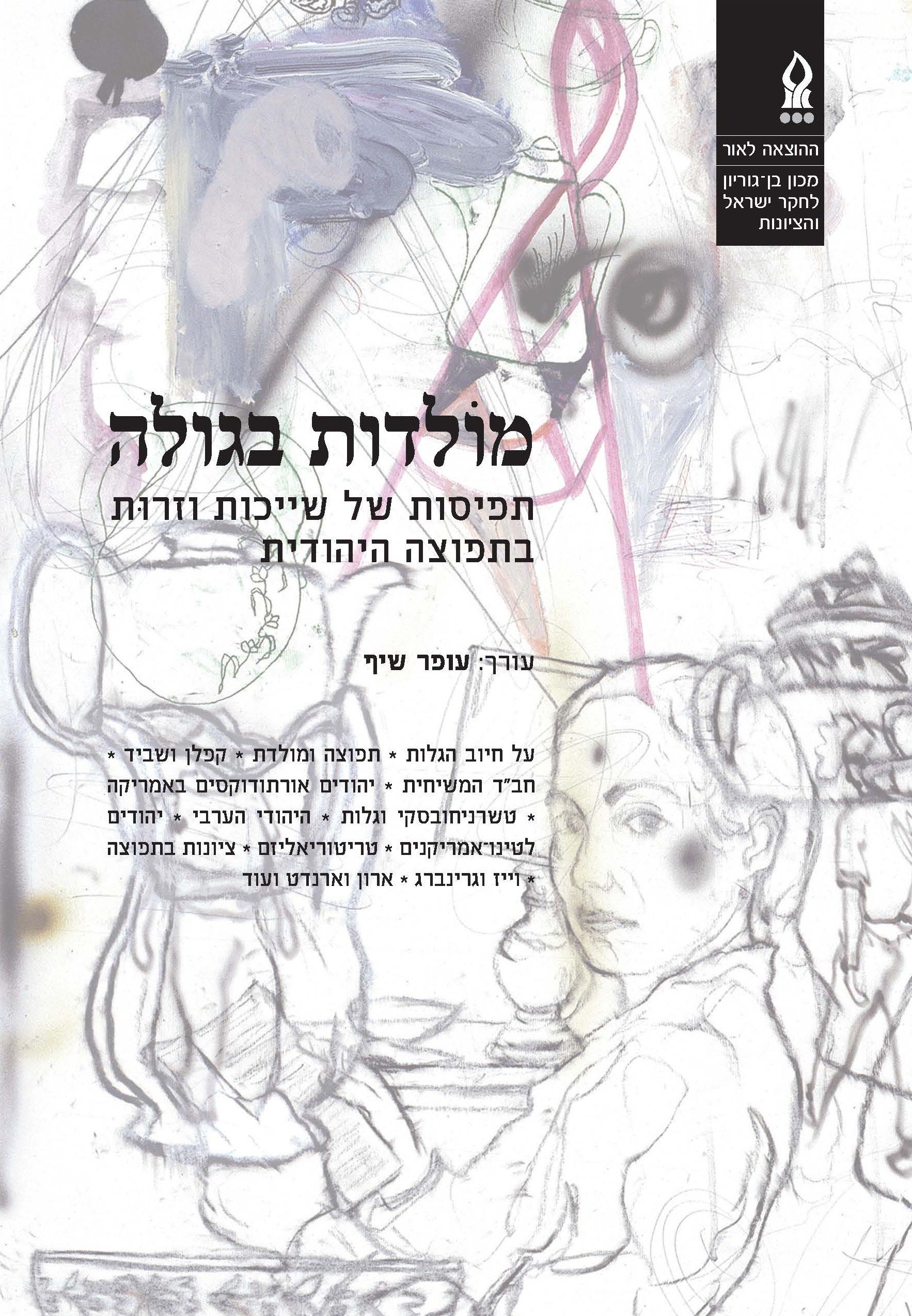
Published
Issue
Section
License
Copyright (c) 2015 IYUNIM: Multidisciplinary Studies in Israeli and Modern Jewish Society

This work is licensed under a Creative Commons Attribution-NonCommercial 4.0 International License.
Unless otherwise indicated, all articles published in IYUNIM: Multidisciplinary Studies in Israeli and Modern Jewish Society are licensed under a Creative Commons Attribution-NonCommercial 4.0 International License (CC BY-NC 4.0).
Under the terms of this license, users may read, download, copy, distribute, reproduce, and adapt the published material for non-commercial purposes, provided that appropriate credit is given to the author(s), the journal, and the original source, and that any changes made are clearly indicated.
Copyright is held by Iyunim: Studies in Israeli and Modern Jewish Society.
Third-party materials included in an article are not covered by this license unless otherwise indicated. If your intended use is not permitted by applicable law or exceeds the permissions granted by the license, you must obtain permission directly from the copyright holder(s).


