
Jewish-Latino-American or Latino-American-Jews? New Approaches to Research on Ethnicity and Diaspora Concept
Keywords:
Jewish-Latin Americans, Latin America, Ethnicity, Diaspora, Transnational Ties, National Culture, Religious Minorities, Latin American StudiesAbstract
Scholarly interest in Jews as a subject of Latin American Studies has grown markedly in recent years. However, too much attention has been given to Jewish trans-national ties and on their Diasporic condition. The emphasis on Jewish particularity suggests that ethnicity is a nonnational phenomenon and that ethnic group members are either separate from, or victims of, national culture. This tendency is not exclusive to scholarship on Jews. Research on Latin Americans of Japanese, Chinese, and Lebanese descent, for example, usually presented the group first and foremost in their Diasporic condition.
In this context, we propose the use of the term ‘Jewish-Latin Americans’, rather than ‘Latin American Jewry’, in order to shift the dominant paradigm about ethnicity in Latin America by returning the ‘nation’ to a prominent position at a moment when the ‘trans-nation’, or perhaps no nation at all, is often an unquestioned assumption. The article advances a series of propositions that might be useful to all students of ethnicity in the region, particularly to scholars working on minorities whose ancestors were characterized religiously as non-Catholic.
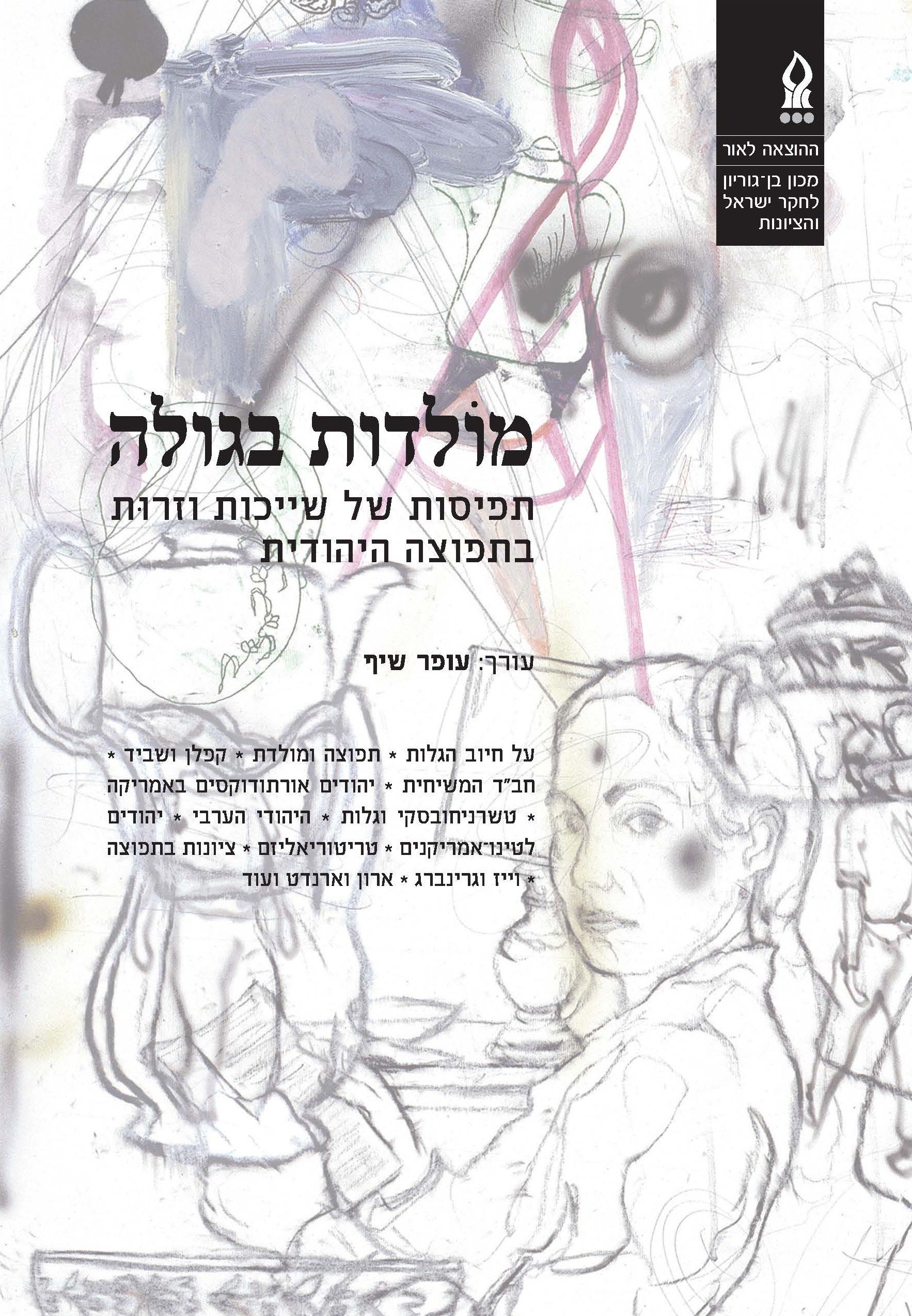
Published
Issue
Section
License
Copyright (c) 2015 IYUNIM: Multidisciplinary Studies in Israeli and Modern Jewish Society

This work is licensed under a Creative Commons Attribution-NonCommercial 4.0 International License.
Unless otherwise indicated, all articles published in IYUNIM: Multidisciplinary Studies in Israeli and Modern Jewish Society are licensed under a Creative Commons Attribution-NonCommercial 4.0 International License (CC BY-NC 4.0).
Under the terms of this license, users may read, download, copy, distribute, reproduce, and adapt the published material for non-commercial purposes, provided that appropriate credit is given to the author(s), the journal, and the original source, and that any changes made are clearly indicated.
Copyright is held by Iyunim: Studies in Israeli and Modern Jewish Society.
Third-party materials included in an article are not covered by this license unless otherwise indicated. If your intended use is not permitted by applicable law or exceeds the permissions granted by the license, you must obtain permission directly from the copyright holder(s).


