
Post-Secular Theology and the Jewish-Feminist Discourse in Israel
Keywords:
Post-Secular Theology, Jewish Feminist Theology, Post-Secularism, Secular-Believers, Jewish Israeli Society, Religiosity and Spirituality, Jewish Identity, ExclusionAbstract
Post-secular theology is a general term for theologies that introduce concepts of the Divine into most of secularism’s normative and epistemological preconceptions. This study is based on a post-secular sociological analysis of Jewish Israeli society, on the one hand, and Christian-oriented feminist theologies, on the other. As such, it seeks to achieve two goals: On the theoretical level, it discusses the concept of feminist post-secular theology as a category of feminist thinking on religiosity and spirituality; on the empirical level, it presents a thematic analysis of the Jewish-feminist theological discourse, suggesting that numerous postsecular manifestations are found in the Jewish-Israeli population, especially among those whom I term secular-believers. This group is characterized by a lack of commitment to traditional Jewish religion as an authoritative source of knowledge, a belief in a divinity, and powerful Jewish self-determination. However, the postsecular perspective has not penetrated the Jewish feminist theological discourse in Israeli academic circles.
This study claims that the structure of Jewish feminist theology excludes postsecular manifestations, views secularism and Judaism as mutually contradictory, preserves the dominant position of religious schools of thought (both orthodox and pluralistic), and offers no place to women who consider both secularism and a relationship with the Divine and Judaism to be central, integral components of their identity.
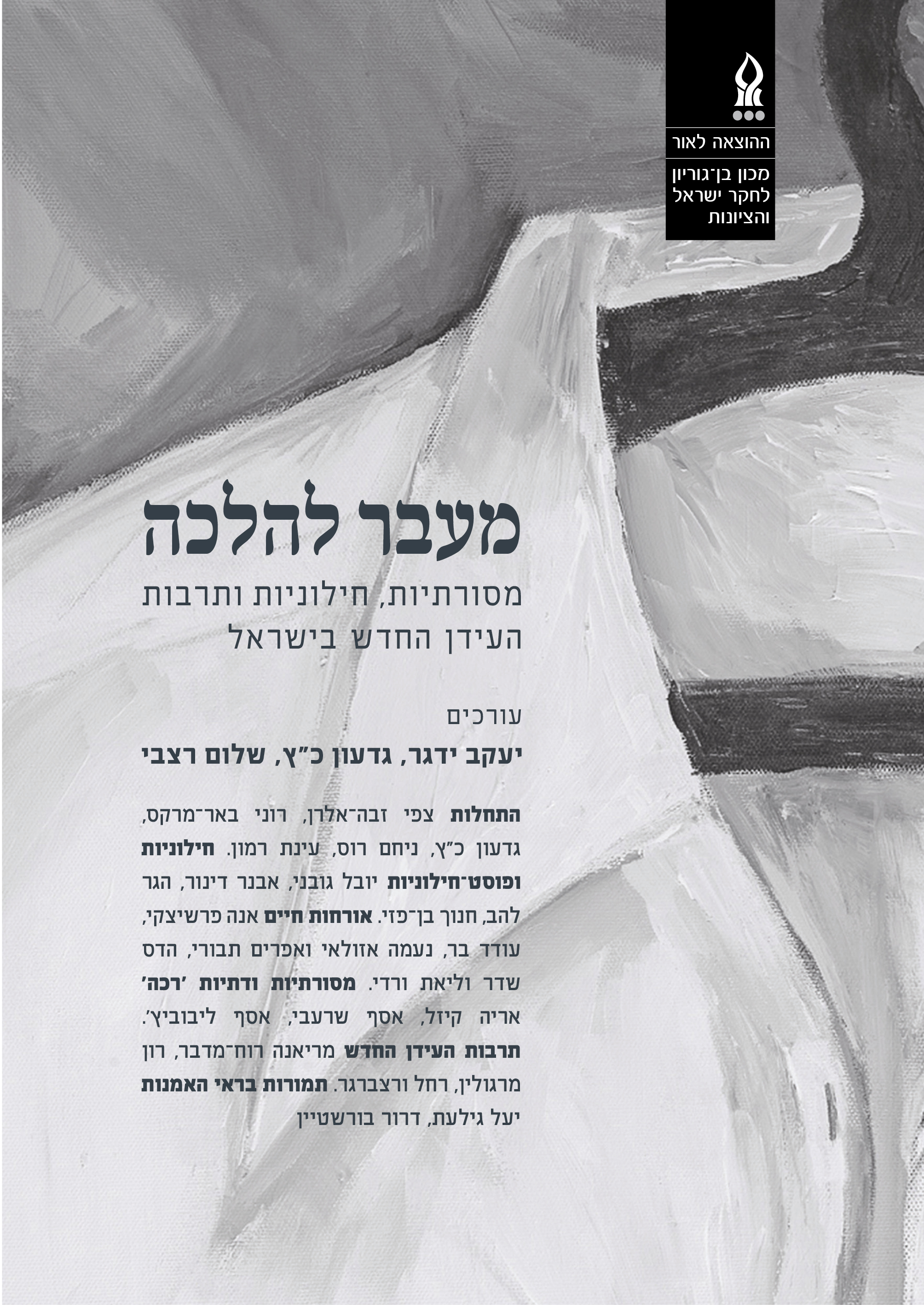
Published
Issue
Section
License
Copyright (c) 2014 IYUNIM: Multidisciplinary Studies in Israeli and Modern Jewish Society

This work is licensed under a Creative Commons Attribution-NonCommercial 4.0 International License.
Unless otherwise indicated, all articles published in IYUNIM: Multidisciplinary Studies in Israeli and Modern Jewish Society are licensed under a Creative Commons Attribution-NonCommercial 4.0 International License (CC BY-NC 4.0).
Under the terms of this license, users may read, download, copy, distribute, reproduce, and adapt the published material for non-commercial purposes, provided that appropriate credit is given to the author(s), the journal, and the original source, and that any changes made are clearly indicated.
Copyright is held by Iyunim: Studies in Israeli and Modern Jewish Society.
Third-party materials included in an article are not covered by this license unless otherwise indicated. If your intended use is not permitted by applicable law or exceeds the permissions granted by the license, you must obtain permission directly from the copyright holder(s).


