
The Jewish-Zionist Discourse in Young Task-Oriented Secular Communities in Israel
Keywords:
Cooperative Task-Oriented Groups, Jewish Renewal, Jewish Identity, Social Movements, Social Change, Group Study, Collective Identity, Zionist Pioneering, SolidarityAbstract
Parallel to the recent spate of privatization in Israeli society, a new model for cooperative, task-oriented communal life has developed as an alternative to the traditional kibbutz. Approximately 2,000 relatively young people have established about one hundred groups, mostly in towns and cities, since the early 1980s. These groups constitute a new social movement aimed at ameliorating society mainly through involvement in education. They hope to serve as models of cooperation, solidarity, and mutual assistance.
As these groups develop internally and expand their social involvement, they become increasingly interested in issues related to Jewish identity. Their approach is innovative and creative. And while it mirrors many trends in the Jewish Renewal Movement in Israel (JRM), substantial differences exist regarding their view of religion and Judaism in Israeli society.
Despite the similarities between the communal movement and the JRM in Israel, the findings show little connection between the two, the basic difference being that the JRM seeks to foster a sense of social commitment that emanates from study, whereas the communal movement groups view their Jewish identity not as a means towards self-realization, but as collective action in helping others. Their open-ended study provides them with the knowledge and ability to influence Israeli culture. Group study and the reinterpretation of traditional, contemporary Jewish texts and the works of the Zionist pioneers bestow a collective identity and unique group consciousness – the sine qua non of a social movement that seeks to foster social change.
The communal groups perceive Judaism as part of Zionism, whereas the JRM tends to view Judaism as culture. The communal groups are not satisfied with merely studying texts, performing rituals, or assuming spirituality. They interface with the rebellious pioneering tradition, emphasizing collectivistic identity as the basis of the Jewish-Zionist enterprise in Israel.
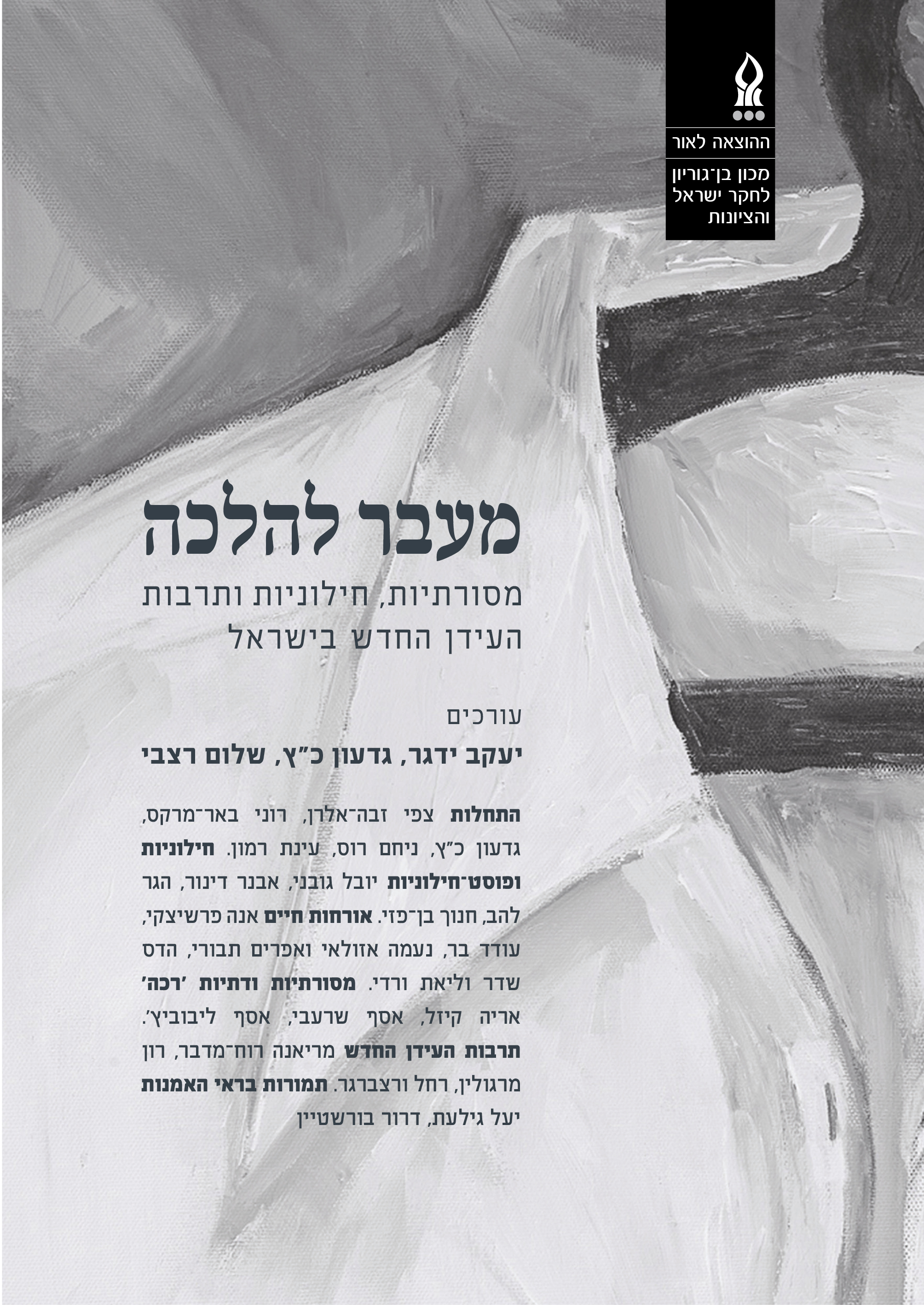
Published
Issue
Section
License
Copyright (c) 2014 IYUNIM: Multidisciplinary Studies in Israeli and Modern Jewish Society

This work is licensed under a Creative Commons Attribution-NonCommercial 4.0 International License.
Unless otherwise indicated, all articles published in IYUNIM: Multidisciplinary Studies in Israeli and Modern Jewish Society are licensed under a Creative Commons Attribution-NonCommercial 4.0 International License (CC BY-NC 4.0).
Under the terms of this license, users may read, download, copy, distribute, reproduce, and adapt the published material for non-commercial purposes, provided that appropriate credit is given to the author(s), the journal, and the original source, and that any changes made are clearly indicated.
Copyright is held by Iyunim: Studies in Israeli and Modern Jewish Society.
Third-party materials included in an article are not covered by this license unless otherwise indicated. If your intended use is not permitted by applicable law or exceeds the permissions granted by the license, you must obtain permission directly from the copyright holder(s).


