
Secular Women in the Messianic Chabad Movement
Keywords:
Secular Women, Secular-Religious Relations, Religious Rituals, Gender Identity, Family Formation, Matchmaking, Anthropological Fieldwork, Messianic ChabadAbstract
This article examines the binary secular-religious relationship and its integration in Jewish-Israeli society. The research, based on anthropological fieldwork, investigates secular women’s participation in a Tel-Aviv messianic Chabad (Hasidic) community. Unlike earlier studies that focused on teshuvah (the return to religion), this study examines how secular women, who do not contemplate teshuvah, practice religious-messianic rituals. This paradox raises questions about the women’s need for a religious milieu and the wish to assimilate secular women into a messianic group. The women of the Chabad community are single and are searching for a practical framework in which to raise a family. They participate in a workshop that reconstructs their identity as a ‘proper wife and mother’, guided by a rebbetzin (wife of a rabbi) who serves as a mother-like guide. The community also functions as a matchmaker. At the same time, the religious leadership fulfills one of its highest goals – to precipitate the coming of the messiah by hastening the coming of man and building a Jewish family. Thus religious and secular become intertwined in a vortex of identities.
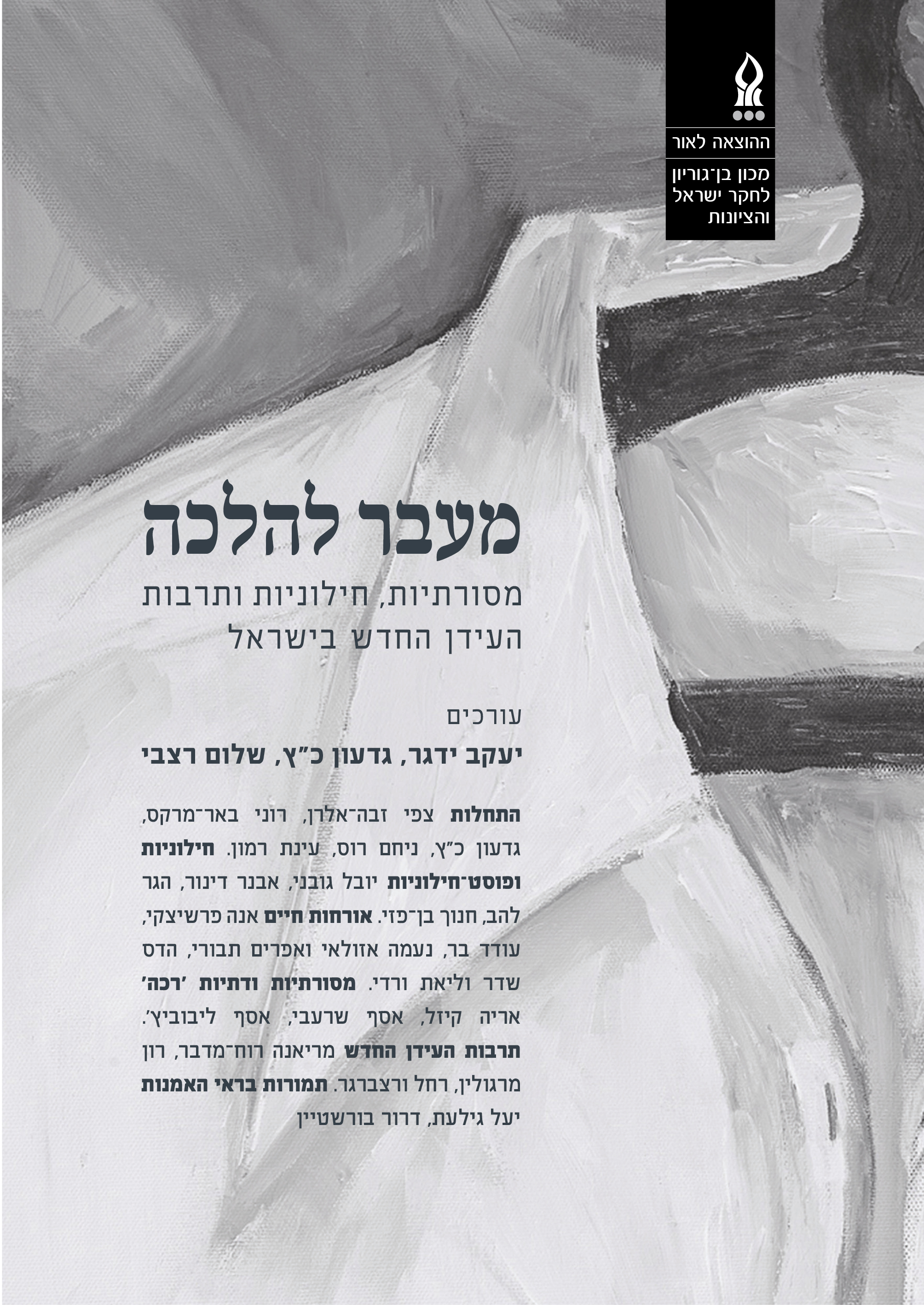
Published
Issue
Section
License
Copyright (c) 2014 IYUNIM: Multidisciplinary Studies in Israeli and Modern Jewish Society

This work is licensed under a Creative Commons Attribution-NonCommercial 4.0 International License.
Unless otherwise indicated, all articles published in IYUNIM: Multidisciplinary Studies in Israeli and Modern Jewish Society are licensed under a Creative Commons Attribution-NonCommercial 4.0 International License (CC BY-NC 4.0).
Under the terms of this license, users may read, download, copy, distribute, reproduce, and adapt the published material for non-commercial purposes, provided that appropriate credit is given to the author(s), the journal, and the original source, and that any changes made are clearly indicated.
Copyright is held by Iyunim: Studies in Israeli and Modern Jewish Society.
Third-party materials included in an article are not covered by this license unless otherwise indicated. If your intended use is not permitted by applicable law or exceeds the permissions granted by the license, you must obtain permission directly from the copyright holder(s).


