
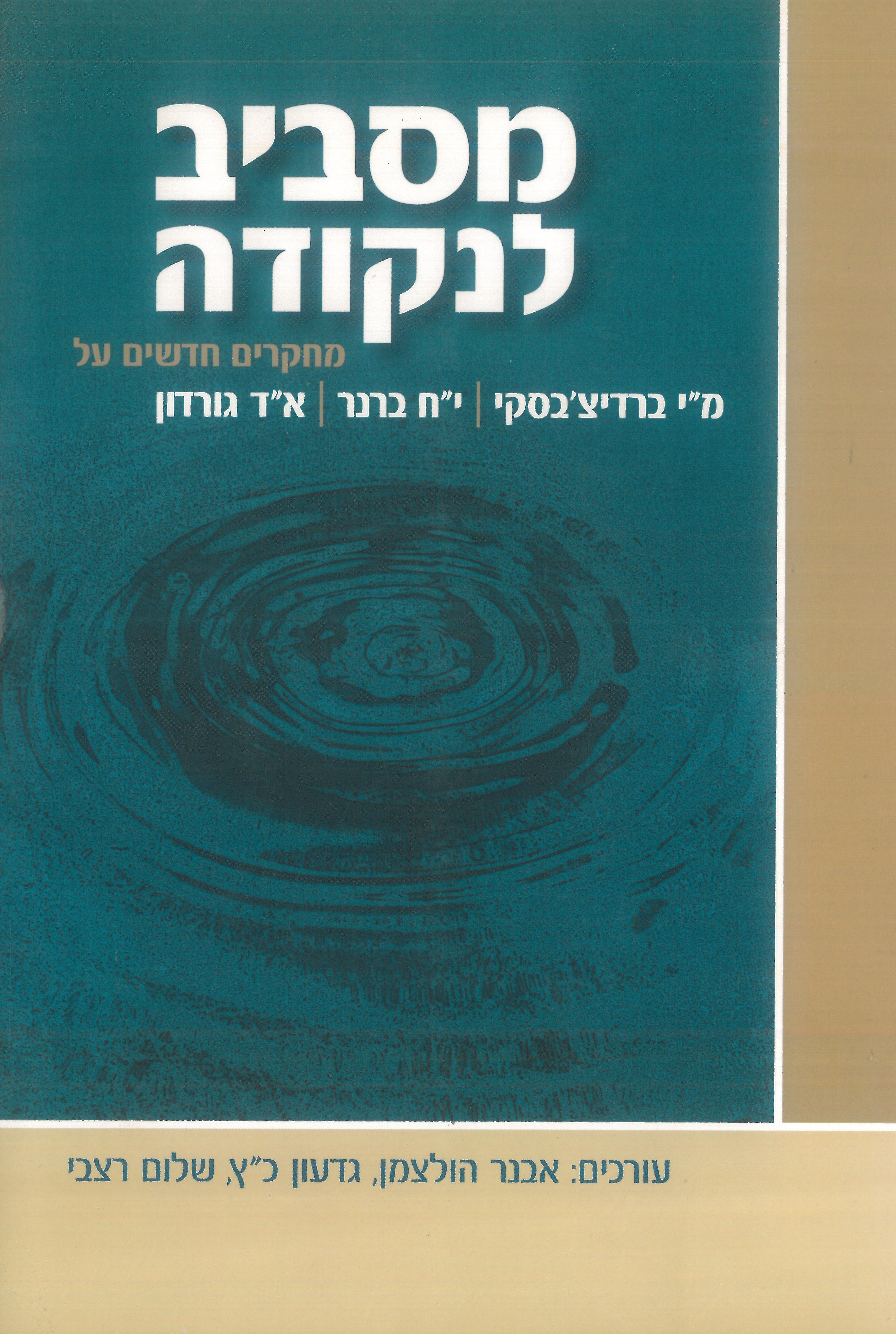
Irrationalism and National Revival in A. D. Gordon’s Thought
Keywords:
Aharon David Gordon, Irrationalism, Zionist Thought, The Concept of Life, National Revival, The New Jew, Hebrew Culture, Jewish IdentityAbstract
Irrational ideas were contemplated by Zionist thinkers for two reasons: (A) Irrational trends were salient in European culture. They influenced the formulation of national ideas in Europe and on Zionist thought; (B) This school of thought included different models of the concept of “life” as articulated by those same European thinkers, as they helped forge its hopes for a national revival and definition of the new Jew.
Philosophical ideas found in the writings of Zionist thinkers were adopted second hand and from popular literature. These ideas have many intellectual origins. The analysis presented here attempts to clarify all of this. This is not a study in the history of ideas. This article focuses on the inner workings of Gordon’s writing. The purpose of discussing Gordon is to clarify how irrational ideas and perceptions, as they are presented in his writings — and being that they are not, as said, original — determine his analysis of national and cultural questions of Jewishness. In short, it is not the relation between European sources and their evolution in Hebrew culture that interests me here, but rather shedding light on the internal relation of his thought process — to understand how perspectives on life serve as the basis for the approaches to national revival in Gordon’s writing.
Downloads
Published
Issue
Section
License
Copyright (c) 2008 IYUNIM: Multidisciplinary Studies in Israeli and Modern Jewish Society

This work is licensed under a Creative Commons Attribution-NonCommercial 4.0 International License.
Unless otherwise indicated, all articles published in IYUNIM: Multidisciplinary Studies in Israeli and Modern Jewish Society are licensed under a Creative Commons Attribution-NonCommercial 4.0 International License (CC BY-NC 4.0).
Under the terms of this license, users may read, download, copy, distribute, reproduce, and adapt the published material for non-commercial purposes, provided that appropriate credit is given to the author(s), the journal, and the original source, and that any changes made are clearly indicated.
Copyright is held by Iyunim: Studies in Israeli and Modern Jewish Society.
Third-party materials included in an article are not covered by this license unless otherwise indicated. If your intended use is not permitted by applicable law or exceeds the permissions granted by the license, you must obtain permission directly from the copyright holder(s).


