
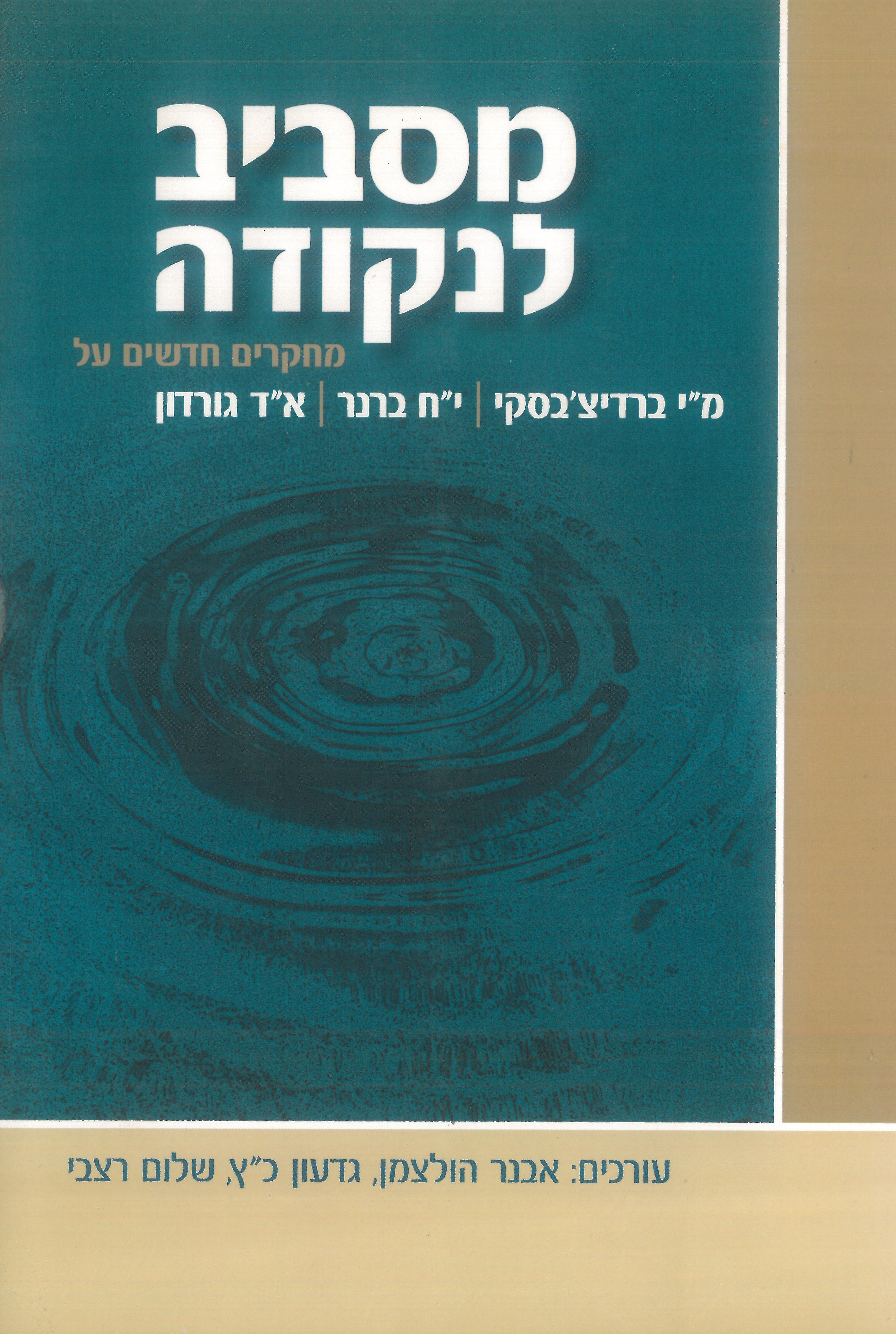
Berdichevsky, Brenner and Gordon on the Sabbath
Keywords:
Micha Yosef Berdichevsky, Yosef Haim Brenner, Aharon David Gordon, Sabbath, Jewish Tradition, Jewish Secularism, The New Jew, Weekly Day of Rest, Ethics, Individual AutonomyAbstract
Berdichevsky, Brenner, Gordon are well known as three thinkers who had exception al influence over the new, secular Jewish public. In the article, the author claims that all three, despite their rebellion against religion, remained attached to tradition, each in his own way. This claim is supported by the use of various sources from their writings that illustrate their attitude towards the mainstay of Jewish existence: the Sabbath.
All three of them changed their views and lifestyles in the course of their lives. This is particularly notable with regard to their attitude towards religion and Jewish tradition. However, in the final analysis, despite their critique of traditional Orthodoxy, when they discussed the subject of the Sabbath, more than once they asked themselves how it could be preserved. All of them hoped that the Sabbath could be reshaped so as to suit modern times and the ‘New Jews’.
All three thinkers displayed pride that the ‘Book of Books’ bequeathed to the world the weekly day of rest. They all regarded the Sabbath as a kind of command obliging consideration with all mankind and even beasts, but in particular with the workingman. All three sought out the ethical dimension of the Sabbath and believed that it could be nurtured in a world that would stress individual independence and autonomy. All three recognized that without the Jewish Sabbath the life of the individual Jew would be much poorer. They were afraid that if the Sabbath lost its unique character, the entire life of the Jewish people, not only their religious life, but also their national life, would be endangered.
Downloads
Published
Issue
Section
License
Copyright (c) 2008 IYUNIM: Multidisciplinary Studies in Israeli and Modern Jewish Society

This work is licensed under a Creative Commons Attribution-NonCommercial 4.0 International License.
Unless otherwise indicated, all articles published in IYUNIM: Multidisciplinary Studies in Israeli and Modern Jewish Society are licensed under a Creative Commons Attribution-NonCommercial 4.0 International License (CC BY-NC 4.0).
Under the terms of this license, users may read, download, copy, distribute, reproduce, and adapt the published material for non-commercial purposes, provided that appropriate credit is given to the author(s), the journal, and the original source, and that any changes made are clearly indicated.
Copyright is held by Iyunim: Studies in Israeli and Modern Jewish Society.
Third-party materials included in an article are not covered by this license unless otherwise indicated. If your intended use is not permitted by applicable law or exceeds the permissions granted by the license, you must obtain permission directly from the copyright holder(s).


