
Exile and Diaspora: Two Zionisms
Keywords:
Zionism, Negation of Exile, Zionist Narrative, Maximalist Interpretation, Minimalist Interpretation, Essentialist-Proprietary Interpretation, Constructivist-Egalitarian InterpretationAbstract
From its inception Zionism was beset by debates about how to interpret the doctrine of the negation of exile. Under a maximalist interpretation, it entailed an absolute rejection of any Jewish life outside the Land of Israel; it was a principle according to which no Jew should live in exile. Under a minimalist interpretation it entailed that not all Jews should live in exile, denying only that the totality of Jewish existence should lie outside the Land of Israel. The maximalist interpretation came to dominate mainstream Zionism from at least as early as the 1930s. However, it has softened from the 1980s onward.
I distinguish in the paper between two interpretations of the Zionist narrative: an essentialist-proprietary interpretation and a constructivistegalitarian interpretation. After explicating some major practical implications of the first interpretation, I argue that from the perspective of the essentialist-proprietary version of Zionism, the transition from a maximalist to a minimalist interpretation of the negation of exile can only be explained by pragmatic and tactical considerations, and cannot be explained by principled considerations. After explaining the constructivist-egalitarian interpretation of Zionism, I show how this approach implies the transition from the maximalist interpretation of the negation of exile to its minimalist interpretation as a matter of principle.
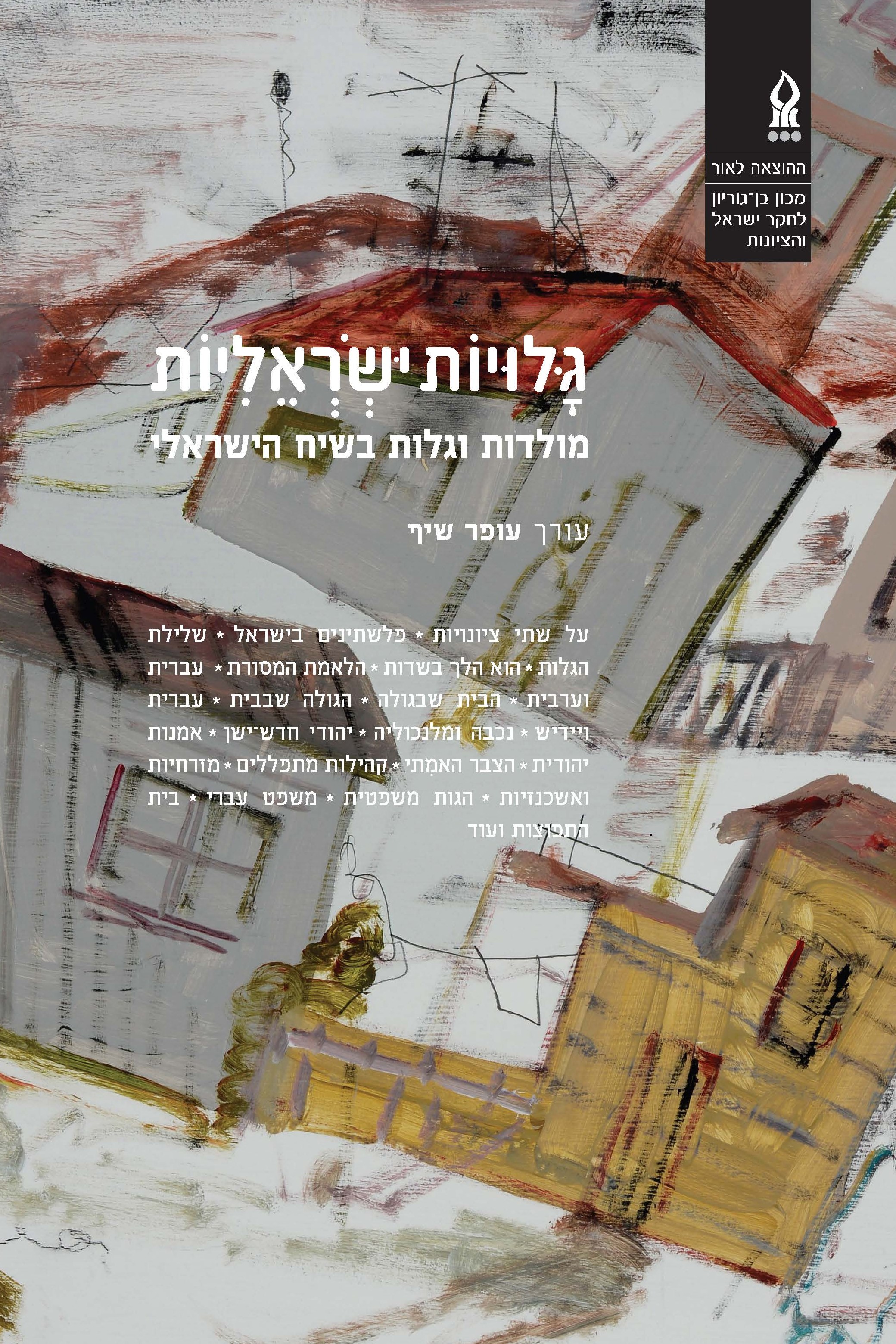
Published
Issue
Section
License
Copyright (c) 2015 IYUNIM: Multidisciplinary Studies in Israeli and Modern Jewish Society

This work is licensed under a Creative Commons Attribution-NonCommercial 4.0 International License.
Unless otherwise indicated, all articles published in IYUNIM: Multidisciplinary Studies in Israeli and Modern Jewish Society are licensed under a Creative Commons Attribution-NonCommercial 4.0 International License (CC BY-NC 4.0).
Under the terms of this license, users may read, download, copy, distribute, reproduce, and adapt the published material for non-commercial purposes, provided that appropriate credit is given to the author(s), the journal, and the original source, and that any changes made are clearly indicated.
Copyright is held by Iyunim: Studies in Israeli and Modern Jewish Society.
Third-party materials included in an article are not covered by this license unless otherwise indicated. If your intended use is not permitted by applicable law or exceeds the permissions granted by the license, you must obtain permission directly from the copyright holder(s).


