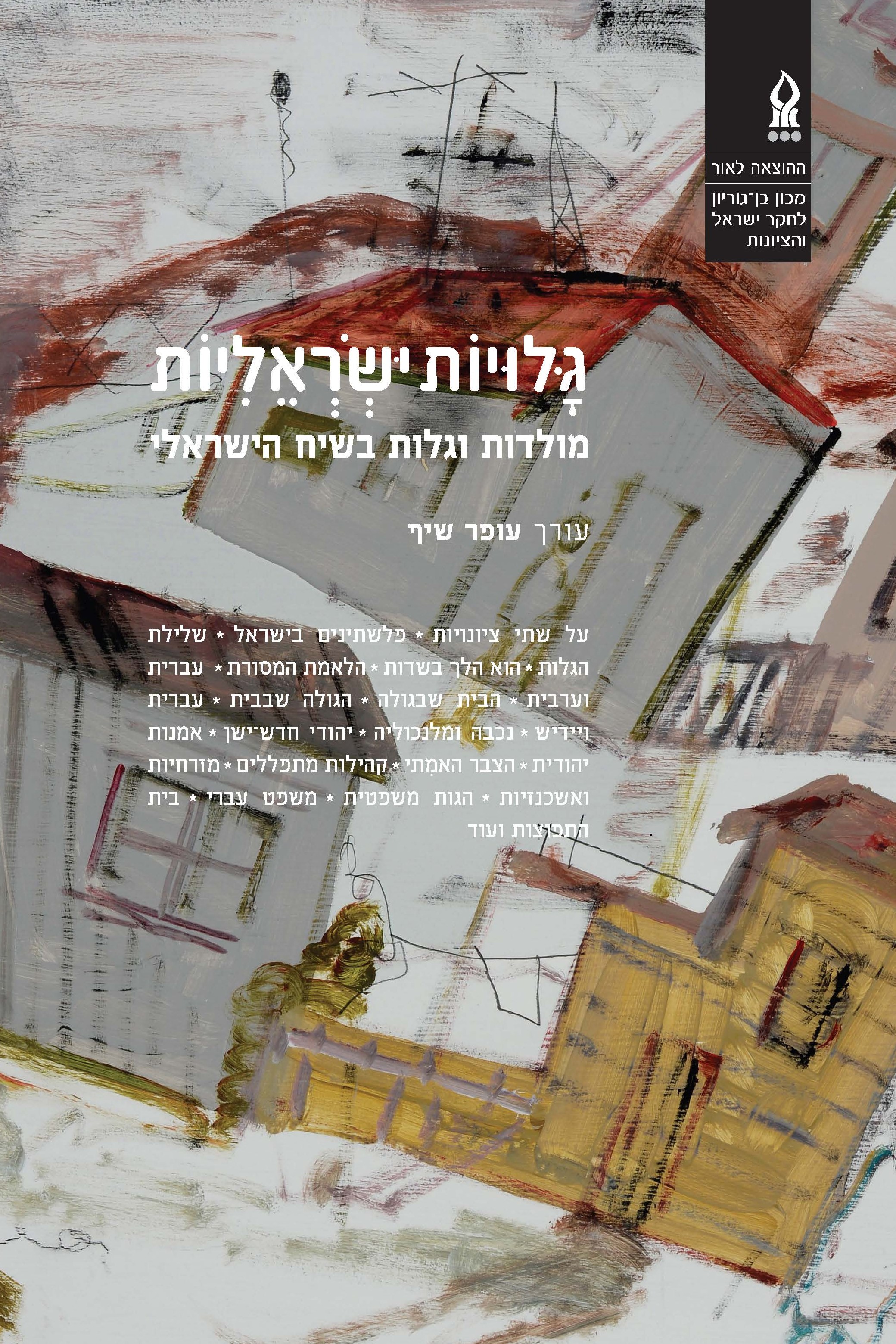
Changes in the Conceptions of ‘Galut’ in Israeli Society
Keywords:
Negation of Galut, Secular Zionism, Religious Zionism, Messianic Nationalism, Westernization, Israeli Society, Diaspora Jewry, Religious TraditionAbstract
There has been a reversal of attitudes toward ‘Galut’ in Israeli society. Most notable is the marked decline of the ‘negation of Galut’ attitude, which is due to various developments; prominent among them are: (a) the decline of secular Zionist ideologies, which strongly supported this position; and (b) the Westernization of Jewish society in both Israel and the Diaspora, which involved a remarkable change in the image of Galut Jews. On the other hand, there has been a considerable change in the opposite direction in Israeli religious Zionism, manifested in the growing tendency to adopt the strongly negative attitude toward Galut. To a large extent this was due to the rise of messianic nationalism in the ranks of religious Zionism. There is, however, a marked difference between the conceptions of Galut in secular and religious Zionism. In its secular version, negation of Galut was closely related to the tendency to identify it with the culture of traditional religious Jewry that was conceived as characterized by passivity, segregation, and exclusion. By contrast, in contemporary religious Zionism Galut is conceived as a way of life, heavily influenced by foreign and hostile environments, and detached from true Jewish national culture, which is grounded in religious tradition and can be preserved only in the Land of Israel.
Published
Issue
Section
License
Copyright (c) 2015 IYUNIM: Multidisciplinary Studies in Israeli and Modern Jewish Society

This work is licensed under a Creative Commons Attribution-NonCommercial 4.0 International License.
Unless otherwise indicated, all articles published in IYUNIM: Multidisciplinary Studies in Israeli and Modern Jewish Society are licensed under a Creative Commons Attribution-NonCommercial 4.0 International License (CC BY-NC 4.0).
Under the terms of this license, users may read, download, copy, distribute, reproduce, and adapt the published material for non-commercial purposes, provided that appropriate credit is given to the author(s), the journal, and the original source, and that any changes made are clearly indicated.
Copyright is held by Iyunim: Studies in Israeli and Modern Jewish Society.
Third-party materials included in an article are not covered by this license unless otherwise indicated. If your intended use is not permitted by applicable law or exceeds the permissions granted by the license, you must obtain permission directly from the copyright holder(s).