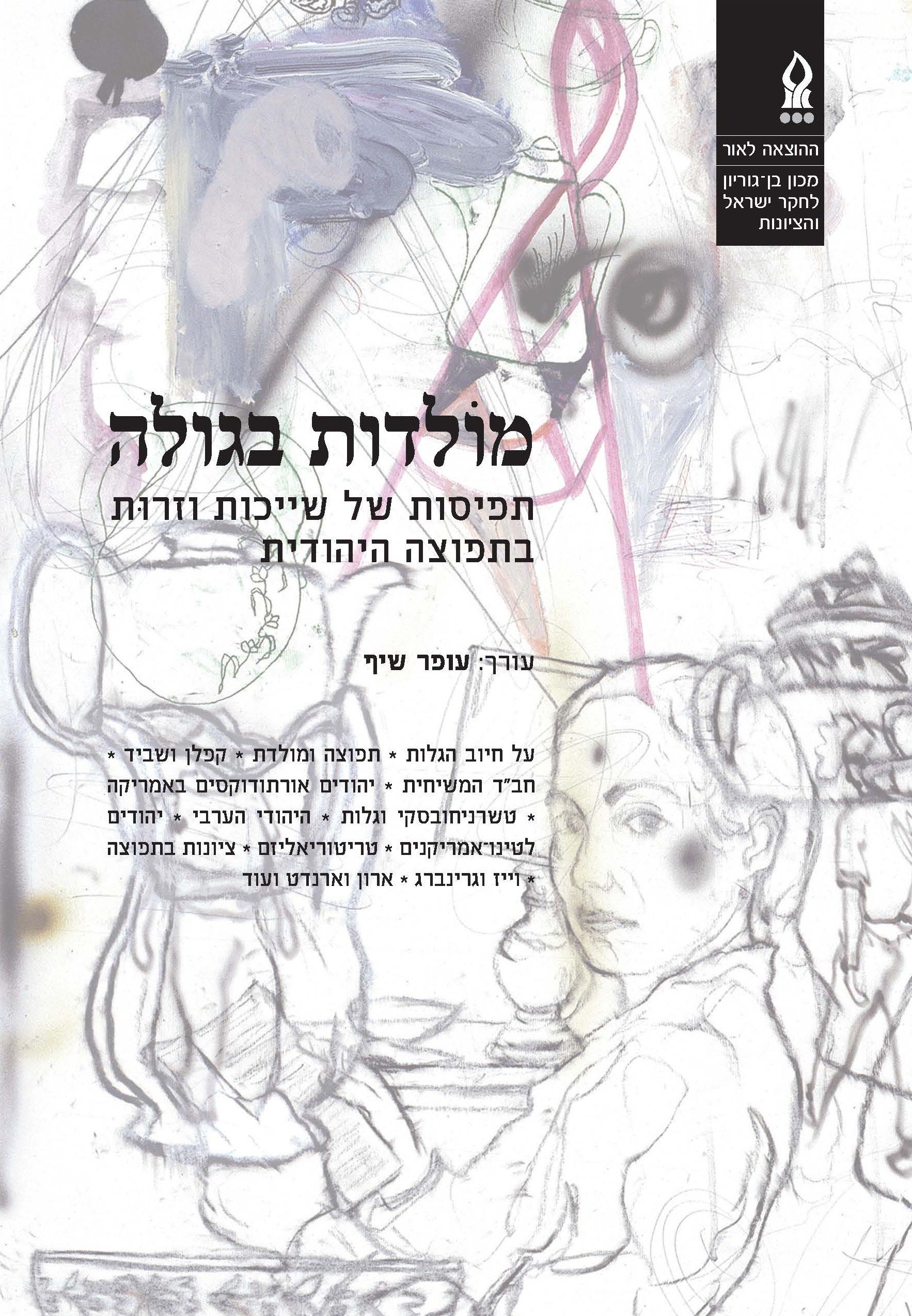
Exile, Diaspora, and Homeland: Past and Future During the Waning of the Emancipation Era in Germany and Hungary
Keywords:
Exile, Diaspora, Homeland, Emancipation, German Jewry, Hungarian Jewry, Jewish Press, Jewish Public DiscourseAbstract
The article deals with the interpretations and conceptualizations of the terms ‘Exile’, ‘Diaspora’, and Homeland in the European Jewish public discourse during the waning of the emancipation era. The first part is devoted to the German Jewish press during 1933–1938 when there was still a relatively free internal Jewish public sphere in Nazi Germany. The second part deals with the interpretations of these terms in the Hungarian Jewish press during 1938–1943. German and Hungarian Jews reevaluated their key concepts as part of their coming to terms with the experience of the decline of their emancipation. Preemancipation concepts and archetypes such as ‘Ghetto’ and ‘the eternal Jew’ were also exposed in this discourse. In both countries most of these discussions were conducted by liberal Jewish spokespeople, but certain Zionist writers helped to sharpen it.
Published
Issue
Section
License
Copyright (c) 2015 IYUNIM: Multidisciplinary Studies in Israeli and Modern Jewish Society

This work is licensed under a Creative Commons Attribution-NonCommercial 4.0 International License.
Unless otherwise indicated, all articles published in IYUNIM: Multidisciplinary Studies in Israeli and Modern Jewish Society are licensed under a Creative Commons Attribution-NonCommercial 4.0 International License (CC BY-NC 4.0).
Under the terms of this license, users may read, download, copy, distribute, reproduce, and adapt the published material for non-commercial purposes, provided that appropriate credit is given to the author(s), the journal, and the original source, and that any changes made are clearly indicated.
Copyright is held by Iyunim: Studies in Israeli and Modern Jewish Society.
Third-party materials included in an article are not covered by this license unless otherwise indicated. If your intended use is not permitted by applicable law or exceeds the permissions granted by the license, you must obtain permission directly from the copyright holder(s).