
Return to Zion Beyond the Dialectic of Exile
Keywords:
Galut (Exile), Gola (Diaspora), Return to Zion, Doctrine of Exile, Hebraic Anthropology, Divine Presence, Transcendence, Zionism, Ultra-OrthodoxyAbstract
The Israeli experience shattered the symbolic economy of exile (Galut). From now on, exile is questioned in the light of the return (shivat Zion) that contemporary Israel embodies. This upheaval generates various attitudes facing Jewish existence, from Zionist to ultra-orthodox. The author puts the new configuration back in a historical viewpoint. He enumerates five ‘economies’ of exile (and return). In order to deepen the challenges coming from such a development, he revisits the notion of galut, which is not related to an uprooting or a violent expulsion but rather refers to a permanent datum of the Hebraic anthropology in its relationship to the world. The two foundational narratives for the Jews refer to exile (from Ur and Egypt); that is to say they come before the settling in Eretz Israel, so that exile precedes the settling in a land that ‘is’ not Canaan but Eretz Israel. Concerning the return, according to the spirit of the exile doctrine, it is not supposed to be a return to a point of departure but to the origin, the ‘reshit’, which precedes it and stands beyond any temporality or at the source of temporality. From this viewpoint, if the Gola (diaspora) (which, according to the author, has a strictly political meaning) finishes is gone, the Galut as such does not end. It is related to the idea that the divine presence is not representable so that it is absent in the real world, this absence being the means of the relationship between naturality and supernaturality (transcendence). This is the profound meaning of exile, in its metaphysical and symbolical dimension.
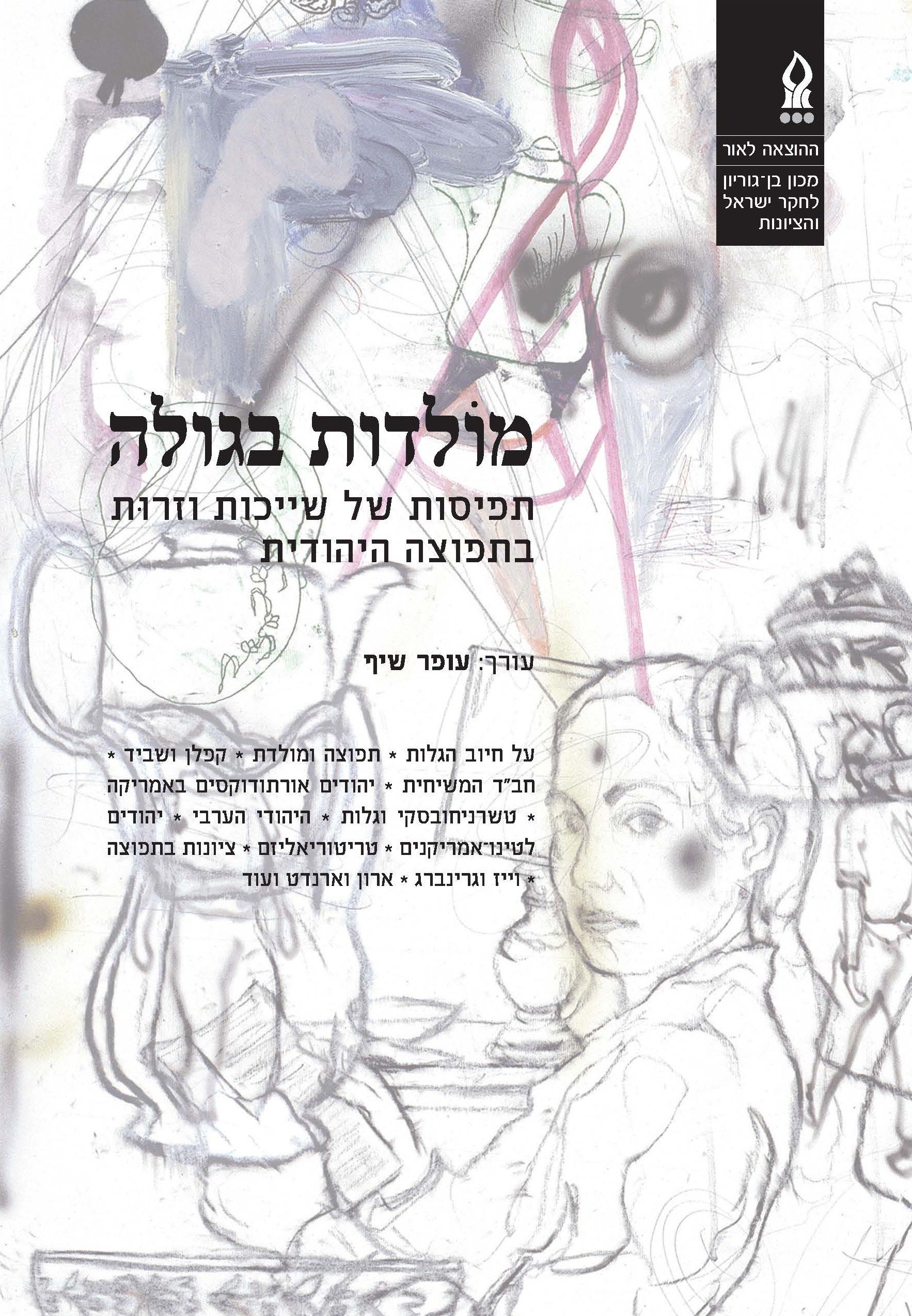
Published
Issue
Section
License
Copyright (c) 2015 IYUNIM: Multidisciplinary Studies in Israeli and Modern Jewish Society

This work is licensed under a Creative Commons Attribution-NonCommercial 4.0 International License.
Unless otherwise indicated, all articles published in IYUNIM: Multidisciplinary Studies in Israeli and Modern Jewish Society are licensed under a Creative Commons Attribution-NonCommercial 4.0 International License (CC BY-NC 4.0).
Under the terms of this license, users may read, download, copy, distribute, reproduce, and adapt the published material for non-commercial purposes, provided that appropriate credit is given to the author(s), the journal, and the original source, and that any changes made are clearly indicated.
Copyright is held by Iyunim: Studies in Israeli and Modern Jewish Society.
Third-party materials included in an article are not covered by this license unless otherwise indicated. If your intended use is not permitted by applicable law or exceeds the permissions granted by the license, you must obtain permission directly from the copyright holder(s).


