
Zion and the Diaspora in the Thought of Mordecai Kaplan and Eliezer Schweid
Keywords:
Mordecai Kaplan, Eliezer Schweid, Zionism, Diaspora, Negation of Exile, American Jewry, Land of Israel, Reconstruction of Jewish Life, Philosophy of Jewish ExistenceAbstract
This paper discusses the relation to Zion and the Diaspora in the thought of the Jewish-American Modecai Kaplan and the Israeli-Jewish Eliezer Schweid. It is shown that the relation to Zion and the Diaspora in the thought of both serves as a focus for consideration of social, cultural, religious, and ethical issues in the context of a broader philosophy of Jewish existence. The sharpest difference between them is exhibited through Kaplan’s refusal to use the term ‘exile’ in reference to the American Jewish Diaspora, while Schweid sees his thought as one that ‘negates’ even the American Jewish Diaspora as a continuation of exile. And yet, Schweid admits to the unique and positive aspects of life in the American Jewish Diaspora, while Kaplan admits to the centrality of the Land of Israel for Jewish life in general. Moreover, both understand Zionism as a movement whose goal is the reconstruction of Jewish life through the building of new social and cultural structures both in the Land of Israel as well as in the Diaspora, even as the distinct civilizational realities of each require different forms of reconstruction in order to rejuvenate Jewish life.
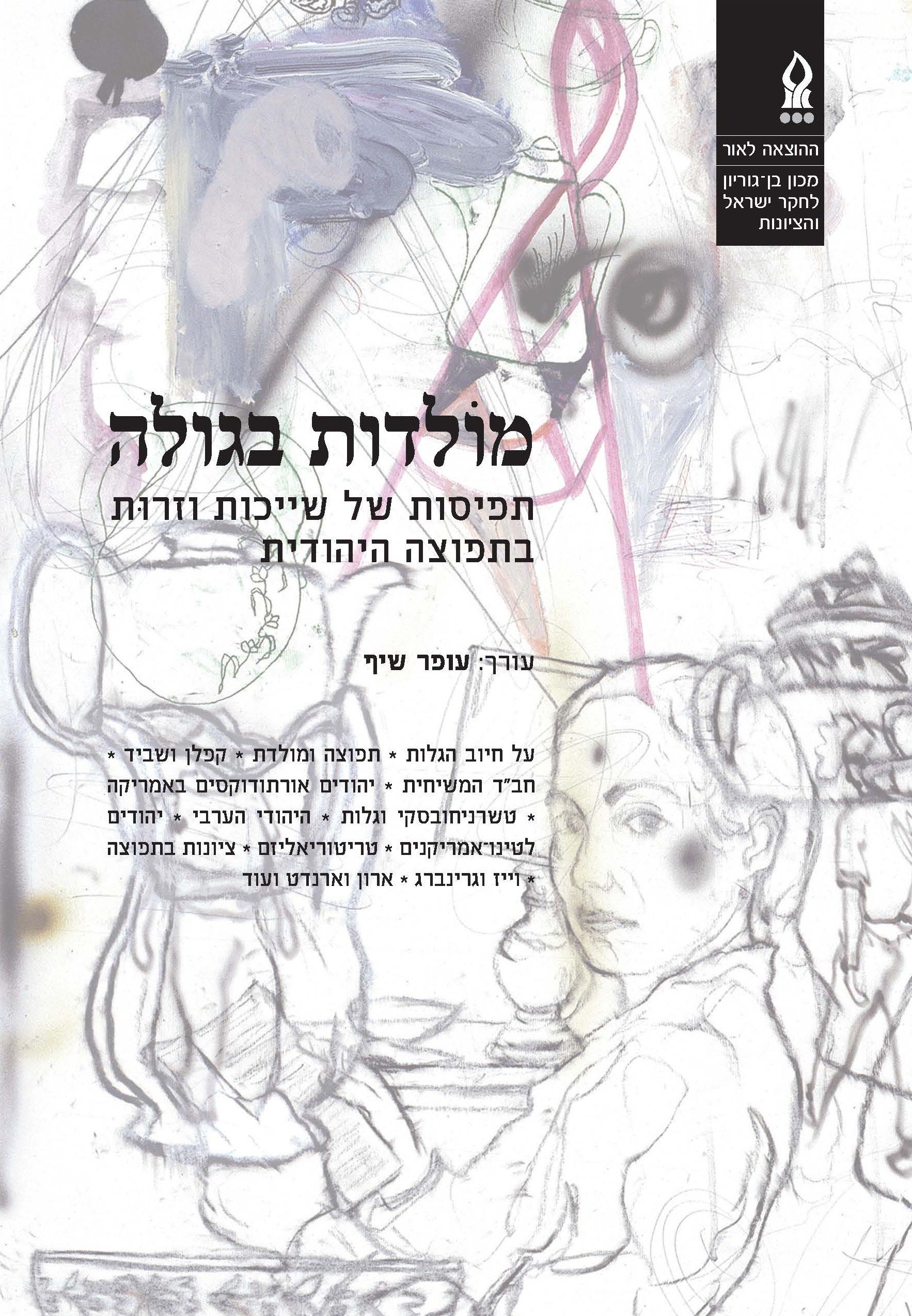
Published
Issue
Section
License
Copyright (c) 2015 IYUNIM: Multidisciplinary Studies in Israeli and Modern Jewish Society

This work is licensed under a Creative Commons Attribution-NonCommercial 4.0 International License.
Unless otherwise indicated, all articles published in IYUNIM: Multidisciplinary Studies in Israeli and Modern Jewish Society are licensed under a Creative Commons Attribution-NonCommercial 4.0 International License (CC BY-NC 4.0).
Under the terms of this license, users may read, download, copy, distribute, reproduce, and adapt the published material for non-commercial purposes, provided that appropriate credit is given to the author(s), the journal, and the original source, and that any changes made are clearly indicated.
Copyright is held by Iyunim: Studies in Israeli and Modern Jewish Society.
Third-party materials included in an article are not covered by this license unless otherwise indicated. If your intended use is not permitted by applicable law or exceeds the permissions granted by the license, you must obtain permission directly from the copyright holder(s).


