
Spiritual Traditionalists: A New Social Movement and the Israeli Identity Today
Keywords:
Spiritual traditionalists, Mizrahi traditionalism, Jewish identity, New Age spirituality, Liberalism, Israeli society, Religious–secular relations, Center and peripheryAbstract
This study deals with the elite, which I term the ‘spiritual traditionalists’, that developed in Israeli society in the last decade. This elite is active in the liberal social network and centers of Israeli culture. It combines an active Jewish Mizrahi tradition with the Israeli liberal discourse and New Age spirituality. It challenges academic attitudes toward traditional Mizrahi Judaism. For years, Israeli academia has stigmatized members of traditional society as weak, impoverished outsiders, as the periphery in the ethno-national discourse (that also includes Ultra-Orthodox Jewry, a group at odds with modernity and liberalism). However, the spiritual traditionalists have created a new Jewish identity that crosses lines in the Israeli social discourse by adopting a moderate approach to Jewish religious law, Jewish spirituality, and liberal ethno-national values. Therefore, they challenge the religious-secular divide as typified by the liberal, secular Tel Aviv center, on the one hand, and the conservative, ethno-national periphery, on the other. This identity introduces a new intellectual direction to modern Jewish life in Israeli society.
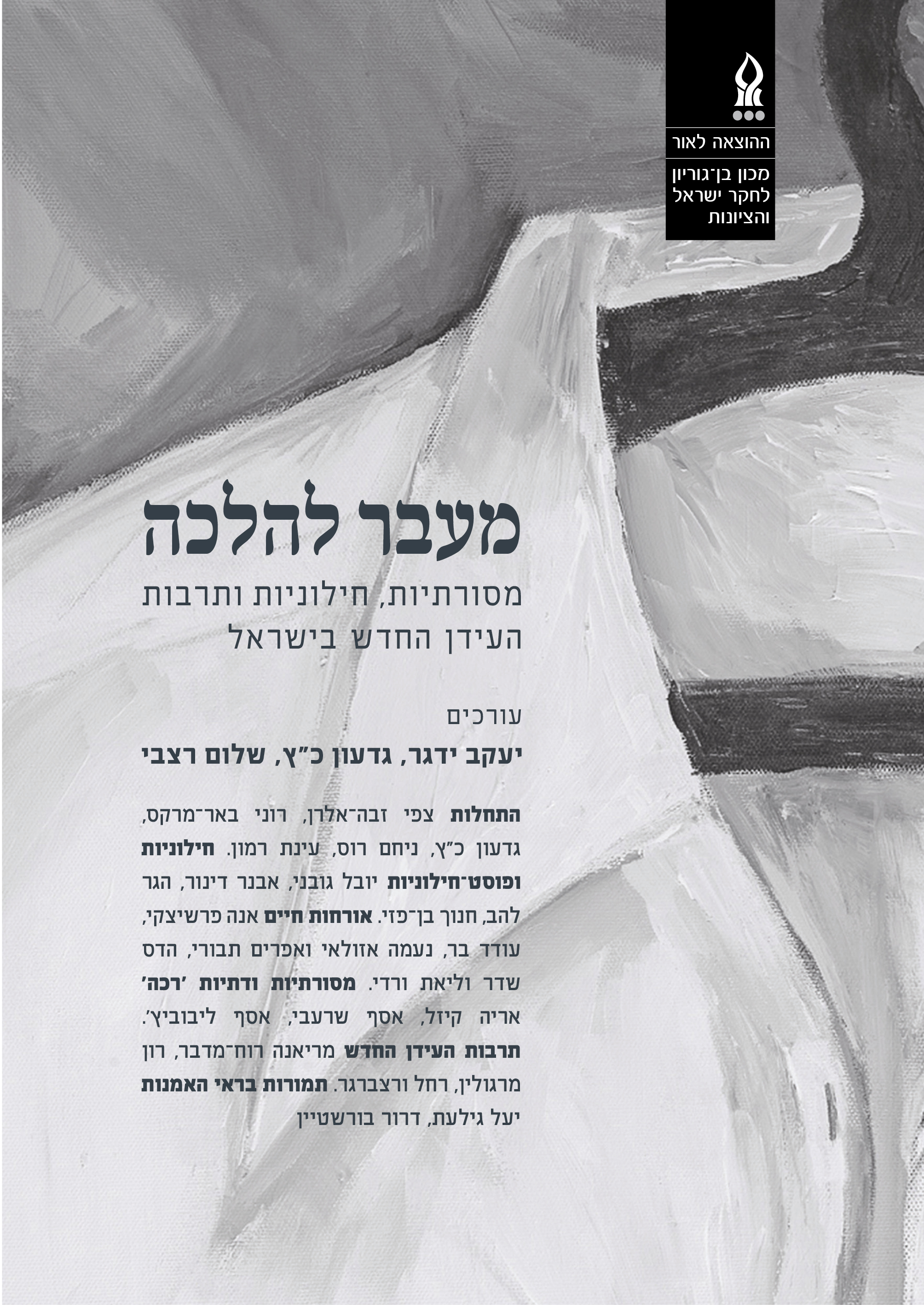
Published
Issue
Section
License
Copyright (c) 2014 IYUNIM: Multidisciplinary Studies in Israeli and Modern Jewish Society

This work is licensed under a Creative Commons Attribution-NonCommercial 4.0 International License.
Unless otherwise indicated, all articles published in IYUNIM: Multidisciplinary Studies in Israeli and Modern Jewish Society are licensed under a Creative Commons Attribution-NonCommercial 4.0 International License (CC BY-NC 4.0).
Under the terms of this license, users may read, download, copy, distribute, reproduce, and adapt the published material for non-commercial purposes, provided that appropriate credit is given to the author(s), the journal, and the original source, and that any changes made are clearly indicated.
Copyright is held by Iyunim: Studies in Israeli and Modern Jewish Society.
Third-party materials included in an article are not covered by this license unless otherwise indicated. If your intended use is not permitted by applicable law or exceeds the permissions granted by the license, you must obtain permission directly from the copyright holder(s).


