
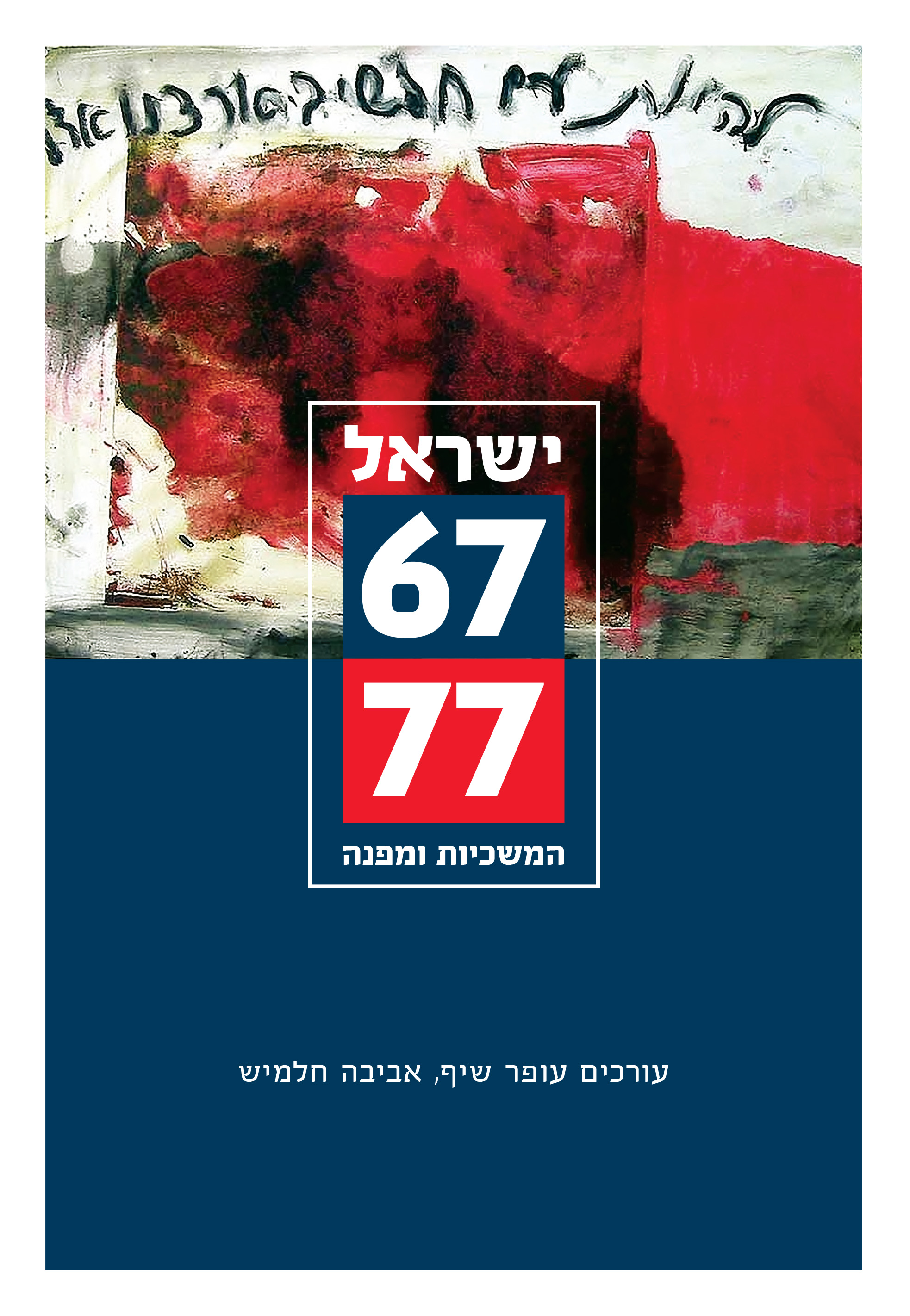
The Impact of the Six Day War on the Canaanite Awakening
Keywords:
Canaanism, Six-Day War, Hillel Kook, Jonathan Ratosh, Israeli-Palestinian Conflict, Israel as a Jewish State, Hebrew Nation, Jewish Identity, Palestinian Identity, Zionist EstablishmentAbstract
The article examines the impact of the Six Day War on the Canaanite awakening - whose relevance ended in the 1950s - in the search of a solution to the Israeli-Palestinian conflict and Israel as a Jewish state.
The author focuses on two schools of thought that emerged from the Canaanite perception: the moderate view of Hillel Kook and the more radical one of Jonathan Ratosh. The differences and similarities between the two schools after 1967 are discussed and the author explains their aspiration to transform the nature of Israeli society and recognize the Palestinian people (Kook) or incorporate Jewish and Palestinian identities into a single Hebrew nation that could lead to a radical geopolitical restructure of the Middle East (Ratosh).
The article also looks at why Israeli society and the Zionist establishment rejected these options, and shows that the public and academic discourse have assimilated Kook’s and Ratosh’s ideas into the 21st century mainly because they touch on fundamental, unresolved issues.
Published
Issue
Section
License
Copyright (c) 2017 IYUNIM: Multidisciplinary Studies in Israeli and Modern Jewish Society

This work is licensed under a Creative Commons Attribution-NonCommercial 4.0 International License.
Unless otherwise indicated, all articles published in IYUNIM: Multidisciplinary Studies in Israeli and Modern Jewish Society are licensed under a Creative Commons Attribution-NonCommercial 4.0 International License (CC BY-NC 4.0).
Under the terms of this license, users may read, download, copy, distribute, reproduce, and adapt the published material for non-commercial purposes, provided that appropriate credit is given to the author(s), the journal, and the original source, and that any changes made are clearly indicated.
Copyright is held by Iyunim: Studies in Israeli and Modern Jewish Society.
Third-party materials included in an article are not covered by this license unless otherwise indicated. If your intended use is not permitted by applicable law or exceeds the permissions granted by the license, you must obtain permission directly from the copyright holder(s).


