
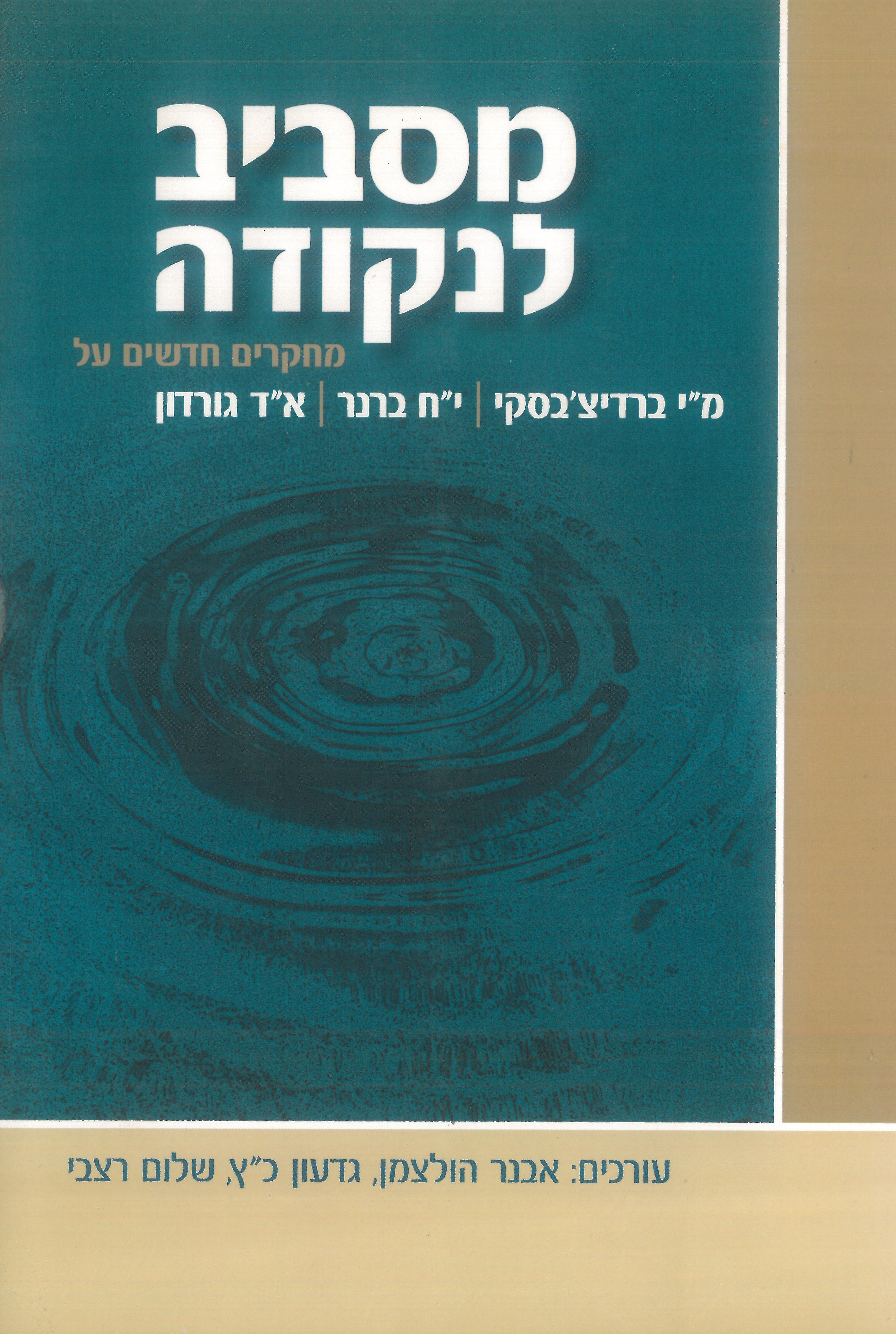
The Jewish Revolution and the Old Testament: Berdichevsky’s and Tchernihovsky’s Reading of the Bible
Keywords:
Micha Yosef Berdichevsky, Shaul Tchernihovsky, Bible, Haskalah, Zionism, Hebrew literature, Rebellion against tradition, National revival, Jewish life in Biblical timesAbstract
In the two modern Jewish revolutions — the Haskalah (Enlightenment) and Zionism — that can be viewed as two stages of one and the same revolution, the Old Testament, that had been neglected and pushed aside in the last centuries of the Diaspora, played a central and multi-faceted role. This article makes the role that the Bible played most perceptible by observing the means by which two of the greatest writers of Hebrew literature, Micha Yosef Berdichevsky (1865-1921) and Shaul Tchernihovsky (1875-1943) read the Bible. Their revolt against Orthodox Judaism was not a rebellion for its own sake but was intended to pave the way for the new national existence. The materials from which the two wished to carve the future for the Jewish people, they found on the outside, in western culture, but they wished to form the very image of that future according to an internal model — Jewish life in Biblical times. They regarded the Bible, the source of Jewish culture, as representing an entirely different Jewish life, even contradictory, to all that had developed in Jewish tradition following it. This life is therefore depicted in the texts of these two writers according to what was convenient in order to achieve this end. They ‘discovered’ in the Bible all the positive values they wished to adopt from within western culture, and in the life that was presented in, the positive contrast to all the things that were to be negated in the contemporary Jewish life.
The article proposes a detailed comparative debate in the ‘Biblical Criticism’ of these two writers, in their subversive depiction of ancient Israeli life and how these function within their works, within the framework of their historiographic concept that included Jewish life throughout the ages. The article also points to the resemblance between the two writers as it is revealed in the early Berdichevsky essays on the one hand, and Tchernihovsky’s poems, from all the periods, on the other hand. The author of the article also surveys the differences between them against the background of this similarity as they are revealed in Berdichevsky’s stories that differ in these aspects from Tchernihovsky’s poems and even from Berdichevsky’s own articles.
The paper concludes with an examination as to the origins of these differences that rose due to the writers’ different educational backgrounds that each received in his childhood and adolescence, the peculiar circumstances in which each of them was raised and the different outlooks on life that each of them adopted.
Downloads
Published
Issue
Section
License
Copyright (c) 2008 IYUNIM: Multidisciplinary Studies in Israeli and Modern Jewish Society

This work is licensed under a Creative Commons Attribution-NonCommercial 4.0 International License.
Unless otherwise indicated, all articles published in IYUNIM: Multidisciplinary Studies in Israeli and Modern Jewish Society are licensed under a Creative Commons Attribution-NonCommercial 4.0 International License (CC BY-NC 4.0).
Under the terms of this license, users may read, download, copy, distribute, reproduce, and adapt the published material for non-commercial purposes, provided that appropriate credit is given to the author(s), the journal, and the original source, and that any changes made are clearly indicated.
Copyright is held by Iyunim: Studies in Israeli and Modern Jewish Society.
Third-party materials included in an article are not covered by this license unless otherwise indicated. If your intended use is not permitted by applicable law or exceeds the permissions granted by the license, you must obtain permission directly from the copyright holder(s).


