
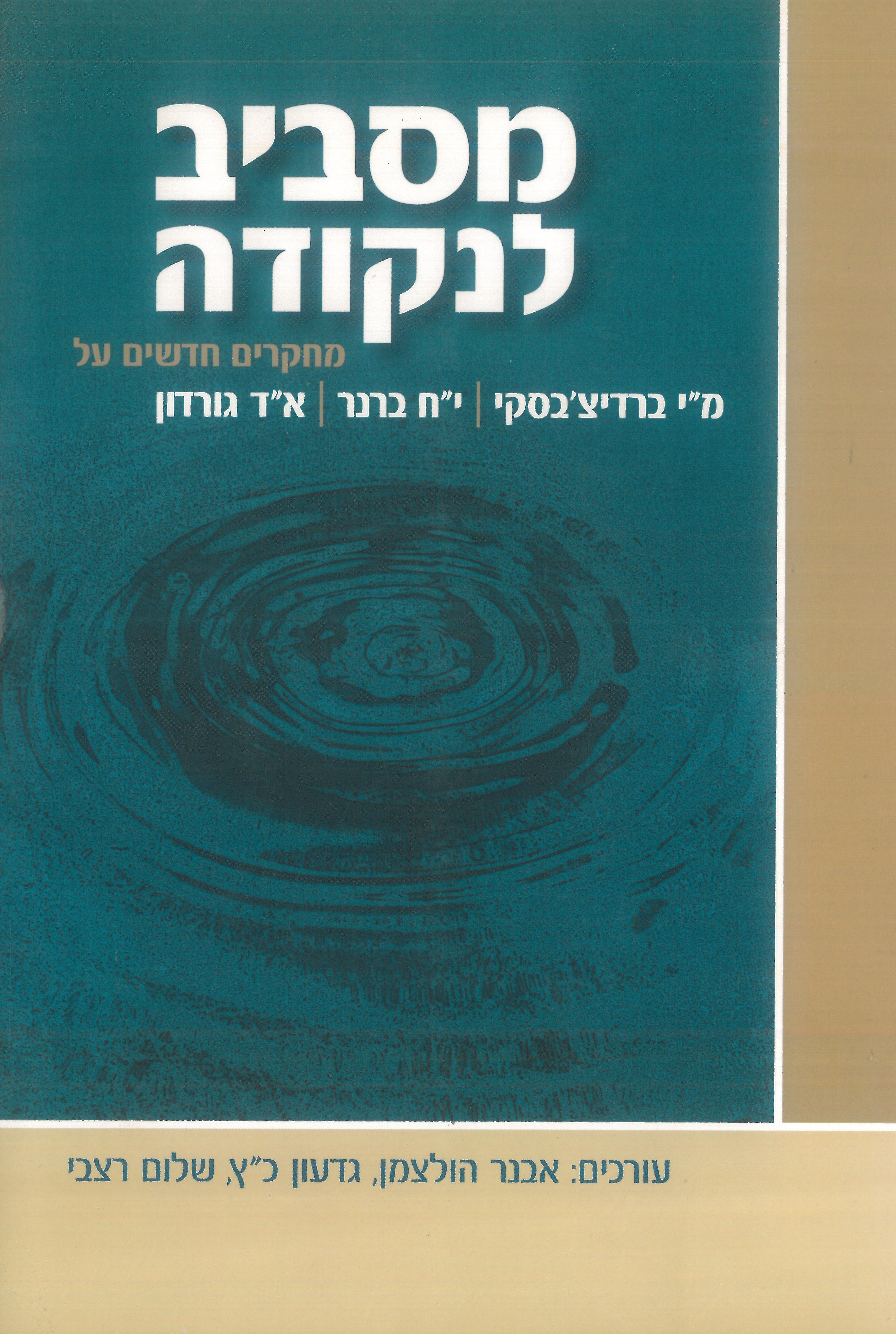
On the ‘Nietzschean’ Dispute between Ahad Ha’am and Berdichevsky
Keywords:
Ahad Ha-Am, Micha Yosef Berdichevsky, Friedrich Nietzsch, Hebrew Literature, Hebrew Culture, Nietzsche’s Reception, Tradition and RenewalAbstract
Through Berdichevsky’s mediation, some of Nietzsche’s most seminal compositions, as well as the first European researches of his thought were well known to Ahad Ha-Am. Nietzsche’s name was mentioned quite frequently in their dispute over the content and the direction of reawakening Hebrew literature and culture. In fact, it was Ahad H‘aam who was the first to mention Nietzsche’s name in their vibrant dispute. If Nietzsche was Berdichevsky’s ‘Rabbi’, as he used to write to Ahad H‘aam, it was only natural that the latter would have liked to know more about his young disciple’s ‘Rabbi’. However, the main concern of this article is not to resolve which of them was closer to Nietzsche, or who held the views closest to Nietzsche’s, but how those views were perceived and used by these two great heroes of the dawning Hebrew culture. If a ‘pure’ Nietzschean is a thinker who urges the reader to overcome an entire cultural upbringing and to exist, as it were, in an a-historical vacuum, then it goes without saying that Ahad Ha-Am could not embrace such ‘Nietzscheanism’. Neither could Berdichevsky, a Hebrew writer who was deeply rooted and profoundly versed in the tradition of his people. What both of them tried to do with their ‘Hebraized’ Nietzsche is depicted and analyzed in this essay.
Downloads
Published
Issue
Section
License
Copyright (c) 2008 IYUNIM: Multidisciplinary Studies in Israeli and Modern Jewish Society

This work is licensed under a Creative Commons Attribution-NonCommercial 4.0 International License.
Unless otherwise indicated, all articles published in IYUNIM: Multidisciplinary Studies in Israeli and Modern Jewish Society are licensed under a Creative Commons Attribution-NonCommercial 4.0 International License (CC BY-NC 4.0).
Under the terms of this license, users may read, download, copy, distribute, reproduce, and adapt the published material for non-commercial purposes, provided that appropriate credit is given to the author(s), the journal, and the original source, and that any changes made are clearly indicated.
Copyright is held by Iyunim: Studies in Israeli and Modern Jewish Society.
Third-party materials included in an article are not covered by this license unless otherwise indicated. If your intended use is not permitted by applicable law or exceeds the permissions granted by the license, you must obtain permission directly from the copyright holder(s).


