
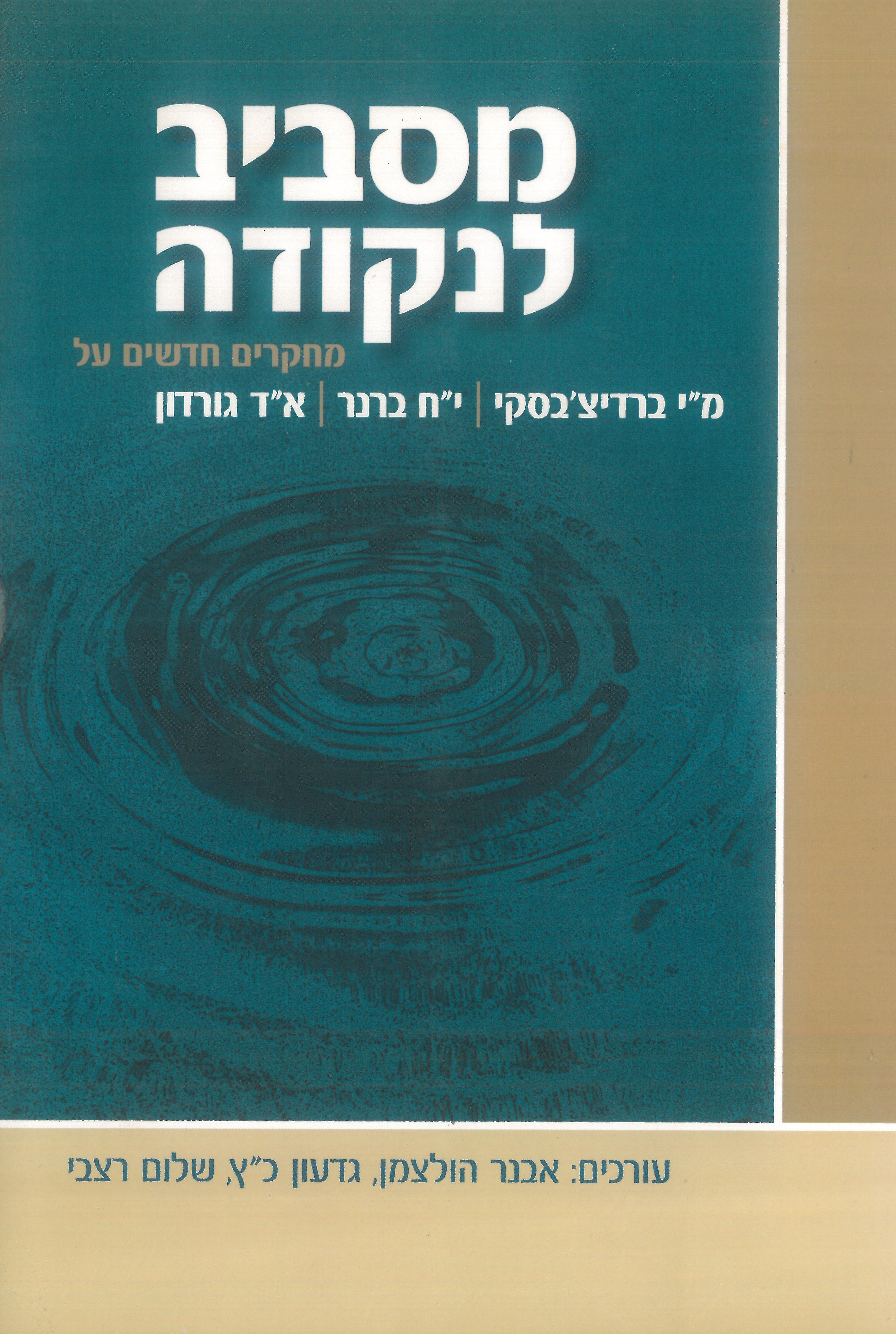
The Sacrifice beyond the River A Reading of Micha Yosef Berdichevsky‘s My Offering
Keywords:
Micha Yosef Berdichevsky, My Offering, Hidden in Thunder, Mythology, Modernism, River-God, Human Sacrifice, Tradition and Secularization, Mythical Time and SpaceAbstract
The story raises several questions, particularly regarding the connection between its various parts. The first question is: how is this mythological story affected by the fact that it is also a modern story, written in the 20th century? Another question is: why did Berdichevsky write a rural story featuring gentile characters?
The River-God in the story is a mythological god, similar to other river gods who have received offerings, at times human, in Greek and other mythologies. These myths depict the struggle between human beings and river-gods. In this sense Berdichevsky remains true to the myth. It is in this context that the author compares this story to another one written by Berdichevsky ‘Hidden in Thunder’. The modernism in ‘My Offering’ is expressed in the way that alongside the mythical time, there is also a physical time, and parallel to the mythical space, there is also a modern one. Modernism is also evident in the fact that at the end of the story, the storyteller addresses the spirit of the hero. At the end of the story Vasil acts as a modern hero.
Another part of the essay deals with the possible connection between the story and Berdichevsky’s mental and spiritual world. In Berdichevsky’s earlier stories, the crossing of the river portrays a shift from the world of tradition to a more secular, modern world. Could it be that the story ‘My Offering’ implies that Berdichevsky held a pessimistic attitude towards such a change?
Downloads
Published
Issue
Section
License
Copyright (c) 2008 IYUNIM: Multidisciplinary Studies in Israeli and Modern Jewish Society

This work is licensed under a Creative Commons Attribution-NonCommercial 4.0 International License.
Unless otherwise indicated, all articles published in IYUNIM: Multidisciplinary Studies in Israeli and Modern Jewish Society are licensed under a Creative Commons Attribution-NonCommercial 4.0 International License (CC BY-NC 4.0).
Under the terms of this license, users may read, download, copy, distribute, reproduce, and adapt the published material for non-commercial purposes, provided that appropriate credit is given to the author(s), the journal, and the original source, and that any changes made are clearly indicated.
Copyright is held by Iyunim: Studies in Israeli and Modern Jewish Society.
Third-party materials included in an article are not covered by this license unless otherwise indicated. If your intended use is not permitted by applicable law or exceeds the permissions granted by the license, you must obtain permission directly from the copyright holder(s).


