
Gordon, Buber and the Question of the Bond to the Eretz-Israel
Keywords:
Aharon David Gordon, Martin Buber, Ahad Ha-Am, Zionism, Jewish Nationalism, The Bond between Nation and Land, Theopolitics, Covenant, Chosenness of Israel, Zionist FulfillmentAbstract
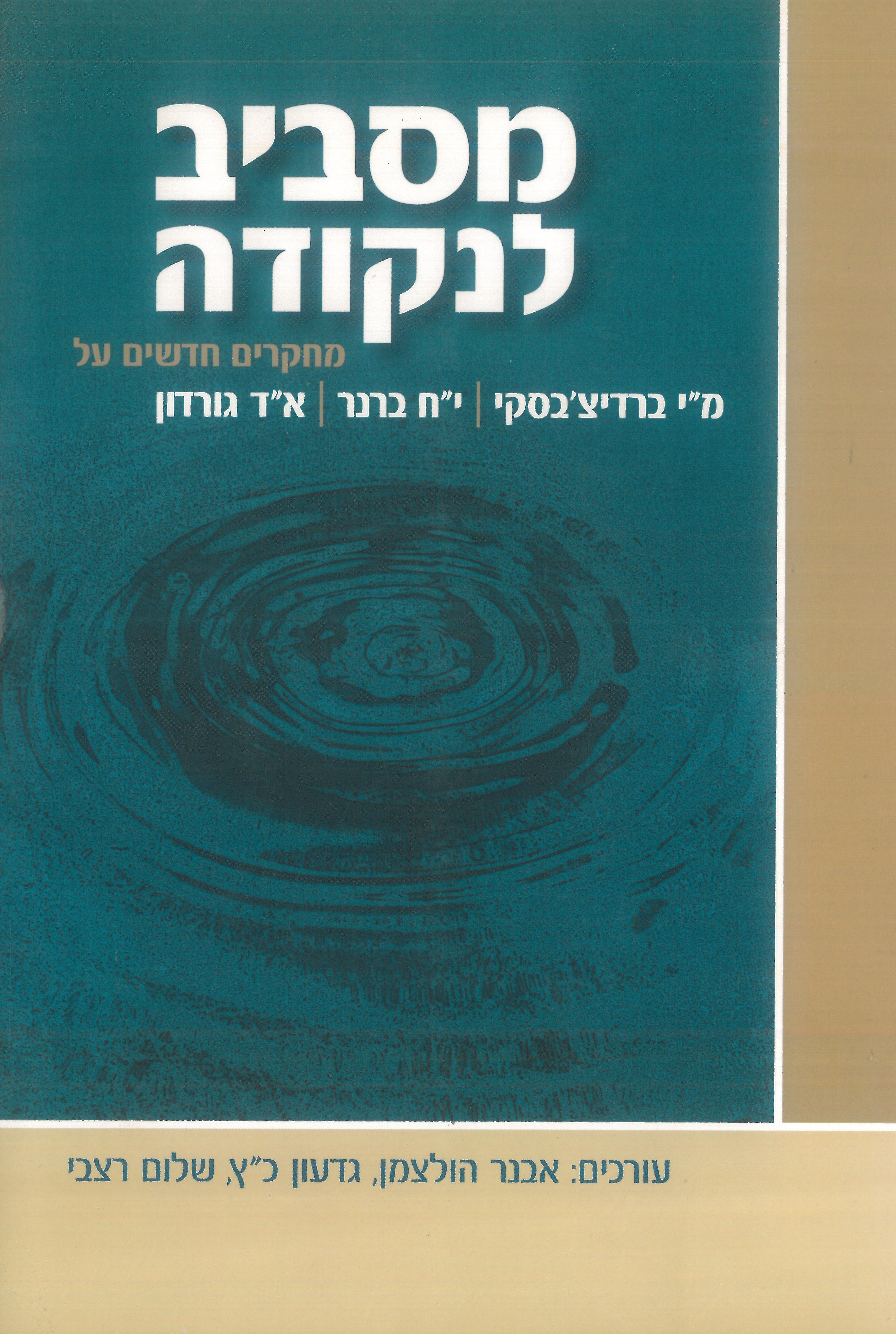
The great importance of Aharon David Gordon as a Zionist and social thinker was already clear to Buber in the first years of World War I, when he published der Jude in 1916. This assessment was also expressed in his response to a poll carried out in 1928 regarding two Hebrew books constituting a historical event, when he identified Ahad Ha’am’s letters and Gordon’s writings as the most important books written. Buber argued that these two books comprise a “major testament to the strong, independent human existence, loyal to the movement from which they originated. He did not settle for this characterization alone and tried to describe them from the Zionist orientation emanating from them. Buber explained that these books gave expression to two paths of Zionist fulfillment whose elements were identical but whose methods were different. While Ahad Ha’am’s approach is “spirit-nationland,” Gordon’s Gordon’s approach is “land-nation-spirit.”
The purpose of the following is to reconstruct Gordon’s national thought through process. The uniqueness of Gordon’s Zionism, similar to that of Buber, originates in the concept of the bond between the nation and the land. According to this approach, the goal of Zionism is the restoration of the individual bond to his people and through its people, to the land. Furthermore, unlike Buber’s approach, whereby the people of Israel’s formation is not natural but dependent on a covenant with God and therefore there is no reason to discuss his perception of nationalism within the conventional conceptual framework, but rather in a theopolitical one, Gordon’s writing demonstrates that he sees the Hebrew nation as a nation whose fate is the same as all other nations. Obviously Gordon’s doctrine has no place for terms like “chosenness of Israel” or “its uniqueness.” Thus, while Buber saw both Jewish nationalism and Zionism in theopolitical, religious terms, at the center of which is the term “covenant,” and the sovereignty of a prophetic God, Gordon saw the nation of Israel as a “division of nature,” like all other nations and thus identified the bond between himself and his land as the natural and normal bond that exists between a nation and its land.
Downloads
Published
Issue
Section
License
Copyright (c) 2008 IYUNIM: Multidisciplinary Studies in Israeli and Modern Jewish Society

This work is licensed under a Creative Commons Attribution-NonCommercial 4.0 International License.
Unless otherwise indicated, all articles published in IYUNIM: Multidisciplinary Studies in Israeli and Modern Jewish Society are licensed under a Creative Commons Attribution-NonCommercial 4.0 International License (CC BY-NC 4.0).
Under the terms of this license, users may read, download, copy, distribute, reproduce, and adapt the published material for non-commercial purposes, provided that appropriate credit is given to the author(s), the journal, and the original source, and that any changes made are clearly indicated.
Copyright is held by Iyunim: Studies in Israeli and Modern Jewish Society.
Third-party materials included in an article are not covered by this license unless otherwise indicated. If your intended use is not permitted by applicable law or exceeds the permissions granted by the license, you must obtain permission directly from the copyright holder(s).


