
What did Yosef Haim Brenner Receive from Hillel Zeitlin
Keywords:
Hillel Zeitlin, Yosef Haim Brenner, Idealism, Philosophical Pessimism, Mysticism, Hasidism, Spiritual Zionism, Arthur Schopenhauer, Individual Suffering, Russian Neo-IdealismAbstract
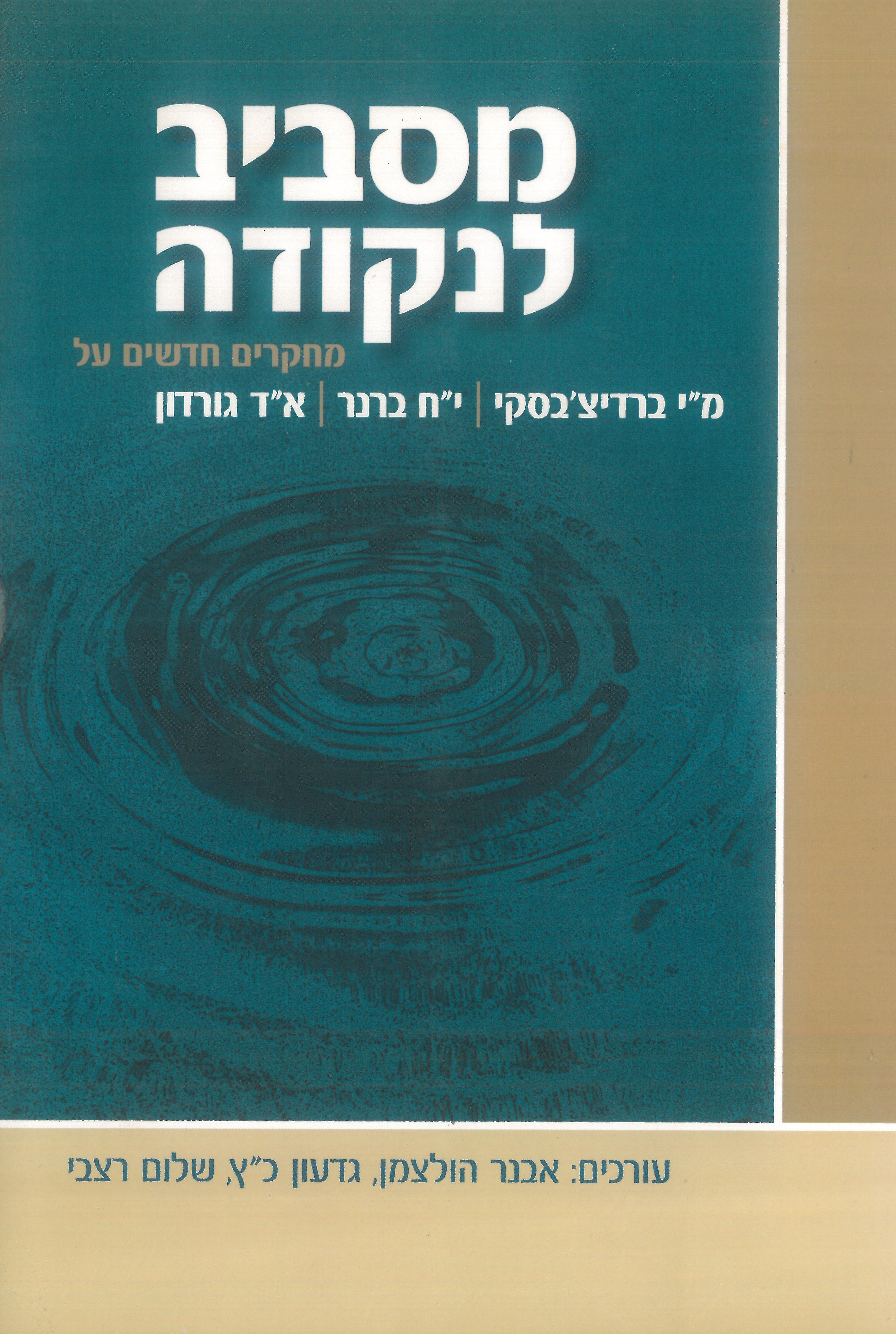
Hillel Zeitlin (1871-1942) was Yosef Haim Brenner’s (1881-1921) mentor from 1894 to 1901 while the latter was living in Homel (Gomel). Yosef Klauzner wrote that Zeitlin drew Brenner to Zionism and Yaacov Golomb wrote that he introduced Brenner with Nietzsche’s writings. Examination of Zeitlin’s ideas at that time against contemporary Russian high culture brings one to the conclusion that Zeitlin was above all an ‘idealist’. Namely, he did not believe in social and political solutions (and therefore rejected the ‘Bund’). He hoped that Zionism would bring about a spiritual, semi-mystical redemption for the Jewish people, in the vein of the Russian neo-idealists who opposed Marxism. However, Zeitlin also criticized spiritual Zionists (Ahad H‘aam and Berdichevsky) who neglected the real suffering of the individual Jew.
In 1899-1900 Zeitlin published a series of essays in which he presented his belief in philosophical pessimism in the vein of Schopenhauer and in mysticism. He found similarity between these ideas and Hasidism. Brenner’s writings show the influence of Zeitlin’s idealism; his care for the individual’s suffering; his belief in the truth of pessimism and his attraction to mysticism.
Downloads
Published
Issue
Section
License
Copyright (c) 2008 IYUNIM: Multidisciplinary Studies in Israeli and Modern Jewish Society

This work is licensed under a Creative Commons Attribution-NonCommercial 4.0 International License.
Unless otherwise indicated, all articles published in IYUNIM: Multidisciplinary Studies in Israeli and Modern Jewish Society are licensed under a Creative Commons Attribution-NonCommercial 4.0 International License (CC BY-NC 4.0).
Under the terms of this license, users may read, download, copy, distribute, reproduce, and adapt the published material for non-commercial purposes, provided that appropriate credit is given to the author(s), the journal, and the original source, and that any changes made are clearly indicated.
Copyright is held by Iyunim: Studies in Israeli and Modern Jewish Society.
Third-party materials included in an article are not covered by this license unless otherwise indicated. If your intended use is not permitted by applicable law or exceeds the permissions granted by the license, you must obtain permission directly from the copyright holder(s).


